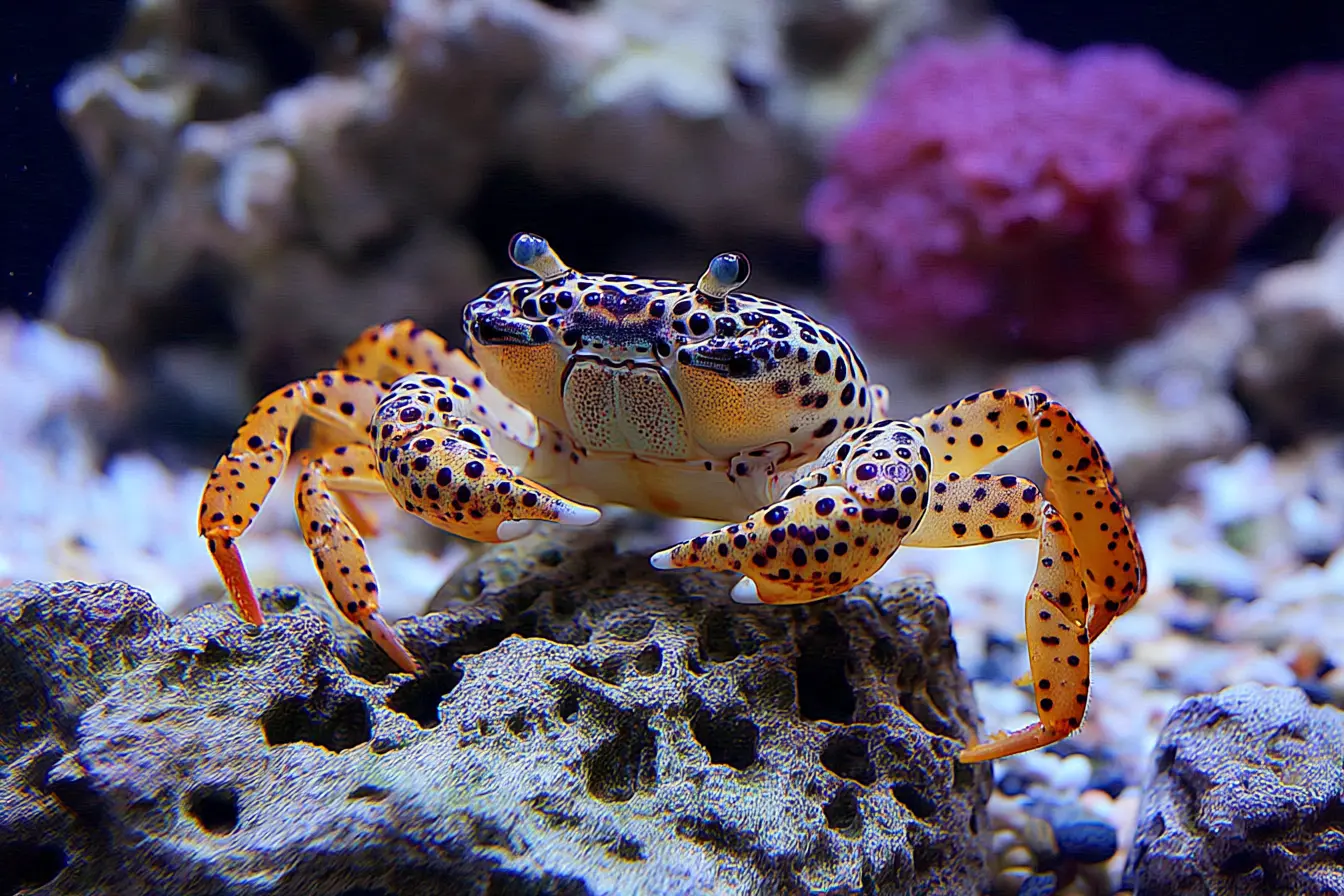
Panther Crabs (Parathelphusa pantherina), also known as Sulawesi Panther Crabs, are striking freshwater crabs admired for their vivid purple bodies covered in bold orange or yellow spots. Endemic to Lake Matano in Sulawesi, Indonesia, these crabs are a specialist species that require carefully maintained conditions. When their needs are met, Panther Crabs are hardy, fascinating invertebrates with plenty of personality.
What Are Panther Crabs?
Panther Crabs are fully freshwater crabs native to a single ancient lake system. Unlike many crabs sold in the aquarium trade, they do not require brackish water and should never be kept in saline conditions.
They are:
- Medium-sized: Adults reach 5–7 cm across the carapace
- Fully aquatic: Do not require a land area
- Territorial: Can be aggressive towards other crabs
- Endemic: Naturally found only in Lake Matano
Their restricted natural range makes correct captive care especially important.
Enclosure Requirements
Aquarium Size
A single Panther Crab should be housed in a tank of at least 60 litres, though larger is always better. If keeping more than one, 100 litres or more is strongly recommended to reduce territorial disputes.
Aquascape and Layout
Panther Crabs are fully aquatic but still appreciate complex environments with plenty of structure.
Recommended layout:
- Rock-heavy aquascape with caves and crevices
- Driftwood for cover and climbing
- Open areas for foraging
- Tight-fitting lid as they are capable climbers
They do not require a land section, but hardscape that breaks the water surface can provide enrichment.
Substrate
Use a soft, natural substrate that allows for digging:
- Fine sand or smooth gravel
- Leaf litter (Indian almond leaves or beech leaves)
- Avoid sharp substrates that may damage limbs
Leaf litter also supports biofilm growth, an important supplementary food source.
Water Conditions
Panther Crabs come from warm, mineral-rich freshwater and are sensitive to poor water quality.
- Temperature: 26–30°C
- pH: 7.5–8.5
- Hardness: Moderate to hard
- Ammonia/Nitrite: 0 ppm
- Nitrate: <20 ppm
Weekly water changes of 20–30% are essential. Use dechlorinated freshwater only.
Filtration and Flow
Clean, oxygen-rich water is critical.
- Use a high-quality filter rated above tank volume
- Moderate water flow is preferred
- Sponge pre-filters help protect crab limbs
Good filtration also supports stable conditions during moulting.
Lighting
Panther Crabs do not have specific lighting needs, but a regular 10–12 hour day/night cycle helps regulate behaviour. Standard aquarium lighting is sufficient and should be kept moderate.
Decor and Hiding Spots
Hiding spaces are essential to reduce stress and aggression.
Provide:
- Rock caves and stacked stones
- Driftwood tunnels
- Ceramic or slate hides
- Dense planting (Anubias, Java fern, mosses)
Each crab should have access to multiple hiding spots, particularly important during moulting.
Diet and Feeding
Panther Crabs are omnivores with a strong preference for meaty foods.
Protein Sources:
- Bloodworms
- Brine shrimp
- Krill
- Prawns (raw, unseasoned)
- Snails
Plant-Based Foods:
- Algae wafers
- Spirulina pellets
- Blanched spinach or courgette
- Leaf litter
Feed 2–3 times per week. Remove uneaten food after a few hours to maintain water quality.
A varied diet supports healthy growth, colouration, and successful moulting.
Social Behaviour and Tank Mates
Panther Crabs are territorial and often aggressive, especially in confined spaces.
Keeping multiple crabs:
- Best kept singly or as a carefully monitored pair
- Provide a large tank with heavy visual barriers
- Never overcrowd
Tank mates:
- Generally not recommended
- Small fish, shrimp, and snails may be eaten
- Fast, robust fish may survive but can be stressed
A species-only setup is the safest option.
Moulting
Like all crabs, Panther Crabs must moult to grow and regenerate limbs.
During moulting:
- Crabs are extremely vulnerable
- They often hide for several days
- Appetite may temporarily disappear
Support moulting with:
- Stable water parameters
- Calcium sources (cuttlebone or mineral blocks)
- Plenty of secure hiding places
Never disturb a moulting crab, and do not remove the shed exoskeleton immediately.
Breeding
Panther Crabs are one of the few freshwater crabs that can reproduce fully in freshwater.
- Females carry large, well-developed eggs
- Juveniles hatch as miniature crabs
- Parental care is minimal
Successful breeding requires excellent water quality, stable conditions, and minimal stress. Juveniles should be separated to prevent cannibalism.
Common Health Issues
Health problems are almost always linked to poor water quality or incorrect temperatures.
Watch for:
- Lethargy or hiding constantly
- Missing limbs without regeneration
- Failed moults
- Fading colouration
Maintaining warm, clean, mineral-rich water is the key to long-term success.
Lifespan and General Care
- Lifespan: 5–7 years in captivity
- Activity: Mostly nocturnal
- Maintenance: Weekly water changes, regular feeding, and close observation
They are best suited to experienced aquarists comfortable with specialised freshwater setups.
Conclusion
Panther Crabs are stunning, intelligent invertebrates that make a dramatic centrepiece in a dedicated aquarium. Their bold colours and confident behaviour set them apart from most freshwater crabs, but they demand respect for their specific needs.
Not a beginner species, Panther Crabs thrive in carefully planned, well-maintained aquaria where water quality and space are prioritised. For keepers willing to meet those requirements, they are deeply rewarding animals with a presence unlike anything else in the freshwater hobby.
Quick questions
- What should I know about panther crabs?
- Panther Crabs, or Parathelphusa pantherina, are colourful freshwater crabs native to Lake Matano in Indonesia. They require specific tank conditions, with a recommended minimum tank size of 60 litres and a preference for a. Vet Verified can help you compare UK veterinary practices by location, species, services and opening hours before you call.
- When should I contact a vet about panther crabs?
- Contact a veterinary practice if your pet seems unwell, symptoms are getting worse, you are unsure what to do, or the situation may be urgent. Vet Verified helps you compare practice details, but a vet should advise on your pet's current care.
- Can Vet Verified help me find exotic vets?
- Yes. Use Vet Verified to compare exotic vets across the UK, then check practice profiles and call directly to confirm current availability.
Find a vet
Need a vet for this?
Use Vet Verified to compare UK veterinary practices that match this topic, then call the practice directly to confirm current services and availability.