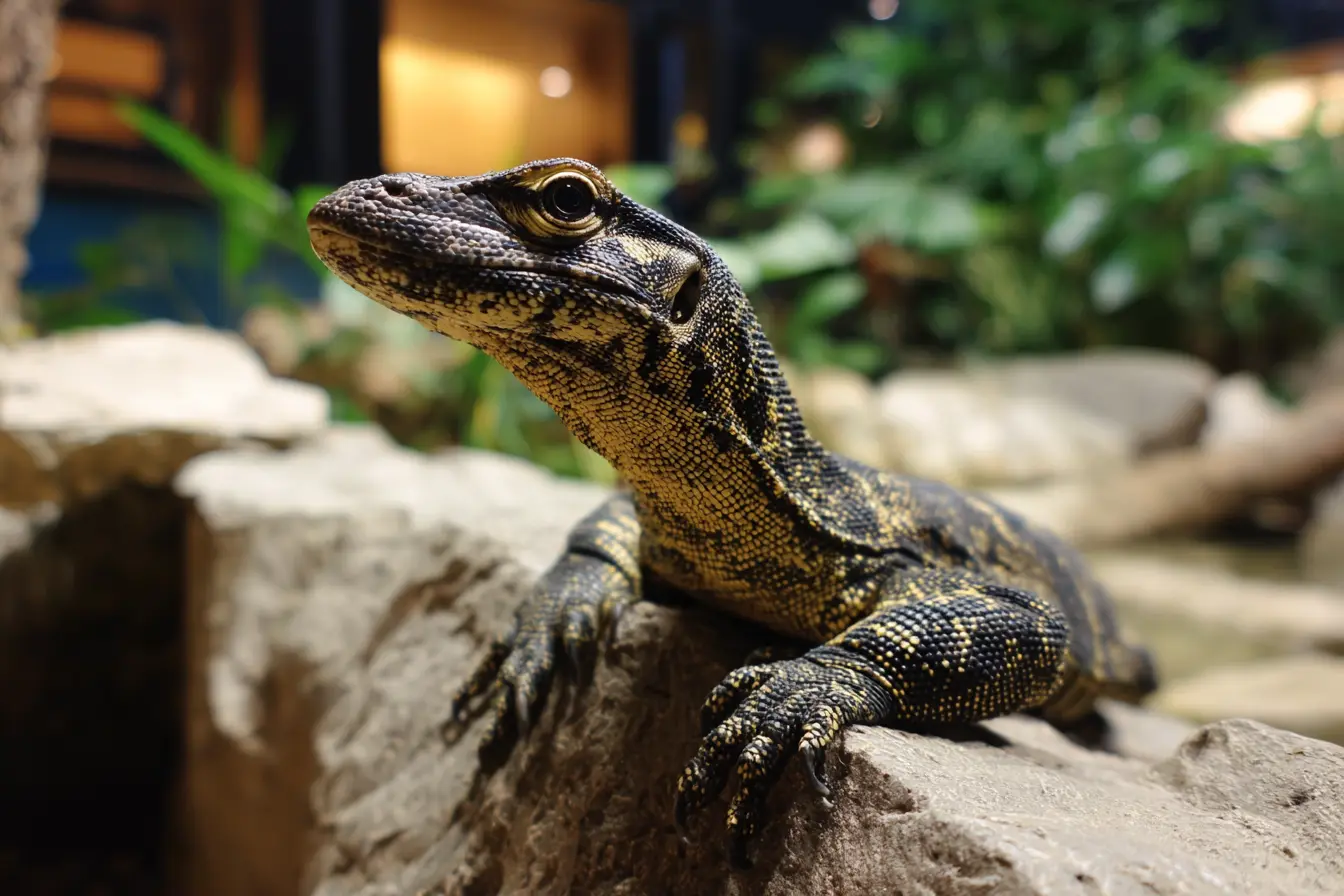
The Asian water monitor (Varanus salvator) is one of the largest and most impressive reptiles in the world. Sleek, intelligent, and powerful, this magnificent lizard can reach lengths of over 2.5 metres, making it second in size only to the Komodo dragon among living monitor species.
Found across much of South and Southeast Asia, the Asian water monitor is a master of both land and water. It thrives in tropical environments, from mangrove swamps and riverbanks to rice fields and even urban canals. For experienced reptile keepers, this remarkable lizard represents one of the most awe-inspiring species in captivity, demanding, yet deeply rewarding.
Origins and Natural Habitat
Asian water monitors are native to a vast range stretching from India and Sri Lanka across Myanmar, Thailand, Malaysia, Indonesia, and the Philippines. They are highly adaptable and are often seen basking on riverbanks, swimming through flooded forests, or hunting near coastal wetlands.
These monitors are superb swimmers, using their laterally flattened tails to propel themselves efficiently through water. They are equally adept on land, where they can sprint short distances and dig extensive burrows. Their adaptability has allowed them to coexist with humans, and they are now a common sight even in city parks and canals across Asia.
Appearance and Temperament
Physical Traits
- Size: Adults average 1.5–2.5 metres, with large males occasionally exceeding 3 metres
- Weight: Can reach over 25 kilograms
- Colouration: Dark brown or black with lighter yellow or cream bands or spots; juveniles are more vividly patterned
- Build: Muscular, with a long, powerful tail and strong limbs designed for digging and swimming
- Tongue and Eyes: Long forked tongue used for scent detection and keen eyesight for spotting prey and threats
Behaviour and Temperament
Asian water monitors are intelligent, inquisitive, and alert. In the wild, they are opportunistic predators and scavengers, often feeding on carrion as well as live prey.
In captivity, they are known for their intelligence and recognition of regular keepers. They can learn feeding routines and may even respond to visual cues. While typically calm once accustomed to handling, they are immensely strong and should only be kept by experienced reptile keepers who can provide the proper space and respect their power.
Housing Requirements
The Asian water monitor is not a lizard for small enclosures or casual hobbyists. They require vast amounts of space, stable heat, and access to water deep enough for swimming. Keeping this species successfully means creating an environment that mimics the tropical wetlands it calls home.
Enclosure Size
- Juveniles: 120 cm x 60 cm x 60 cm minimum
- Adults: At least 3 metres long, 2 metres wide, and 1.5 metres high (larger is always better)
Custom-built enclosures or converted rooms are often necessary for adult specimens. Outdoor enclosures are ideal in suitable climates, provided they are secure and heated appropriately.
Heating and Temperature Gradient
- Basking area: 50–55°C
- Ambient temperature: 28–32°C
- Cool end: 25°C
- Night-time: Should not drop below 24°C
Provide a basking platform under high-output heat lamps or ceramic heaters. Use multiple thermometers to ensure an even gradient and prevent cold or overheated spots.
Lighting and UVB
UVB lighting is essential for calcium metabolism and overall health. Use a 10–12% UVB tube or equivalent full-spectrum lamp covering at least half of the enclosure. Maintain a 12-hour day/night light cycle to simulate natural tropical conditions.
Humidity and Water
Maintain humidity levels around 70–90%. Regular misting and a large water pool are necessary, as these monitors frequently soak and swim.
The water section should be large enough for the lizard to fully submerge and turn around comfortably, ideally comprising at least one-third of the enclosure. The pool must be filtered and cleaned frequently to prevent bacterial growth.
Substrate and Furnishings
- Substrate: A deep mix of soil, sand, and coconut fibre to allow digging
- Hides: Provide secure hiding spots in both warm and cool areas
- Decor: Include sturdy logs, rocks, and climbing structures for enrichment
These lizards appreciate vertical elements and basking platforms. Deep substrate encourages natural digging behaviour, which helps reduce stress.
Diet and Feeding
Asian water monitors are carnivorous and opportunistic feeders. Their varied diet in the wild includes fish, crustaceans, birds, rodents, eggs, and carrion. In captivity, a balanced and controlled diet is essential to prevent obesity and nutritional deficiencies.
Feeding Schedule
- Juveniles: Every day or every other day
- Adults: 3–4 times per week
Food Items
- Rodents (mice, rats, and quail chicks)
- Fish (avoid oily species like salmon)
- Crustaceans such as prawns or crayfish
- Eggs
- Occasional treats like insects or lean poultry
All food should be appropriately sized. No larger than the monitor’s head and dusted occasionally with calcium and vitamin supplements. Offer variety to ensure complete nutrition.
Feeding Tips
These monitors are intelligent hunters. Scatter food, hide it in logs, or place it in shallow water to encourage natural foraging behaviour. Always supervise feeding, especially if the monitor is housed with others, to prevent competition or aggression.
Handling and Behaviour
Asian water monitors are powerful animals that demand respect. Young monitors can be defensive and may hiss, lash with their tails, or bite when threatened. However, with patience and regular, gentle interaction, many become calm and even sociable with their keepers.
- Begin with short handling sessions
- Always support the entire body and tail
- Avoid sudden movements or grabbing from above
- Never handle immediately after feeding
With time, some individuals become confident enough to take food from tongs or explore their surroundings calmly when supervised.
Common Health Concerns
Obesity
Overfeeding and lack of exercise can lead to obesity, particularly in captivity. Maintain a sensible feeding schedule and provide space for movement.
Respiratory Infections
Often caused by low temperatures or high humidity without proper ventilation. Symptoms include wheezing or bubbling around the nostrils.
Shedding Issues
Low humidity can lead to incomplete sheds, particularly around the toes and tail. Ensure adequate humidity and rough surfaces for rubbing.
Nutritional Deficiencies
Ensure UVB lighting and a varied diet to prevent metabolic bone disease and vitamin deficiencies.
Parasites
Wild-caught individuals may carry parasites. Always source captive-bred monitors and schedule veterinary checks.
Lifespan and Breeding
Asian water monitors are long-lived, often reaching 20–25 years in captivity when properly cared for.
Breeding is complex and typically attempted only by advanced keepers. Females lay 10–30 eggs in burrows or nesting boxes filled with moist substrate. Incubation at 30°C lasts around 200 days. Hatchlings are around 30–40 cm long and independent from birth, feeding on small insects and fish.
Intelligence and Enrichment
Asian water monitors are among the most intelligent reptiles. They learn quickly, recognise their keepers, and can even solve basic puzzles for food rewards.
Provide enrichment to keep them mentally and physically stimulated, such as:
- Rearranging enclosure decor
- Hiding food items for scent-tracking
- Offering safe climbing opportunities
They benefit greatly from large, stimulating environments that mimic the complexity of their wild habitats.
Conclusion
The Asian water monitor is a truly extraordinary reptile, graceful in the water, formidable on land, and among the most intelligent lizards on Earth. For experienced keepers who can meet its demanding space, heat, and environmental needs, it offers one of the most rewarding reptile-keeping experiences imaginable.
Its strength and size may be intimidating, but beneath that power lies a curious and surprisingly calm nature. With the right care and respect, the Asian water monitor becomes more than a display animal, it becomes a fascinating, interactive ambassador of the wild tropics.
Owning one is not for the faint-hearted, but for those ready to rise to the challenge, the reward is nothing short of extraordinary.
Quick questions
- What should I know about asian water monitor?
- The Asian water monitor (Varanus salvator) is a large reptile found across South and Southeast Asia. It thrives in both land and water environments, requiring ample space, warmth, and water for swimming. This intelligent lizard. Vet Verified can help you compare UK veterinary practices by location, species, services and opening hours before you call.
- When should I contact a vet about asian water monitor?
- Contact a veterinary practice if your pet seems unwell, symptoms are getting worse, you are unsure what to do, or the situation may be urgent. Vet Verified helps you compare practice details, but a vet should advise on your pet's current care.
- Can Vet Verified help me find exotic vets?
- Yes. Use Vet Verified to compare exotic vets across the UK, then check practice profiles and call directly to confirm current availability.
Find a vet
Need a vet for this?
Use Vet Verified to compare UK veterinary practices that match this topic, then call the practice directly to confirm current services and availability.
Search by species
- Exotic vets Find UK veterinary practices that list exotic pet care. Compare practice profiles, opening hours, contact details and verification signals.
- Bird vets Find UK veterinary practices that list care for birds. Compare practice profiles, contact details, opening hours and verification signals.