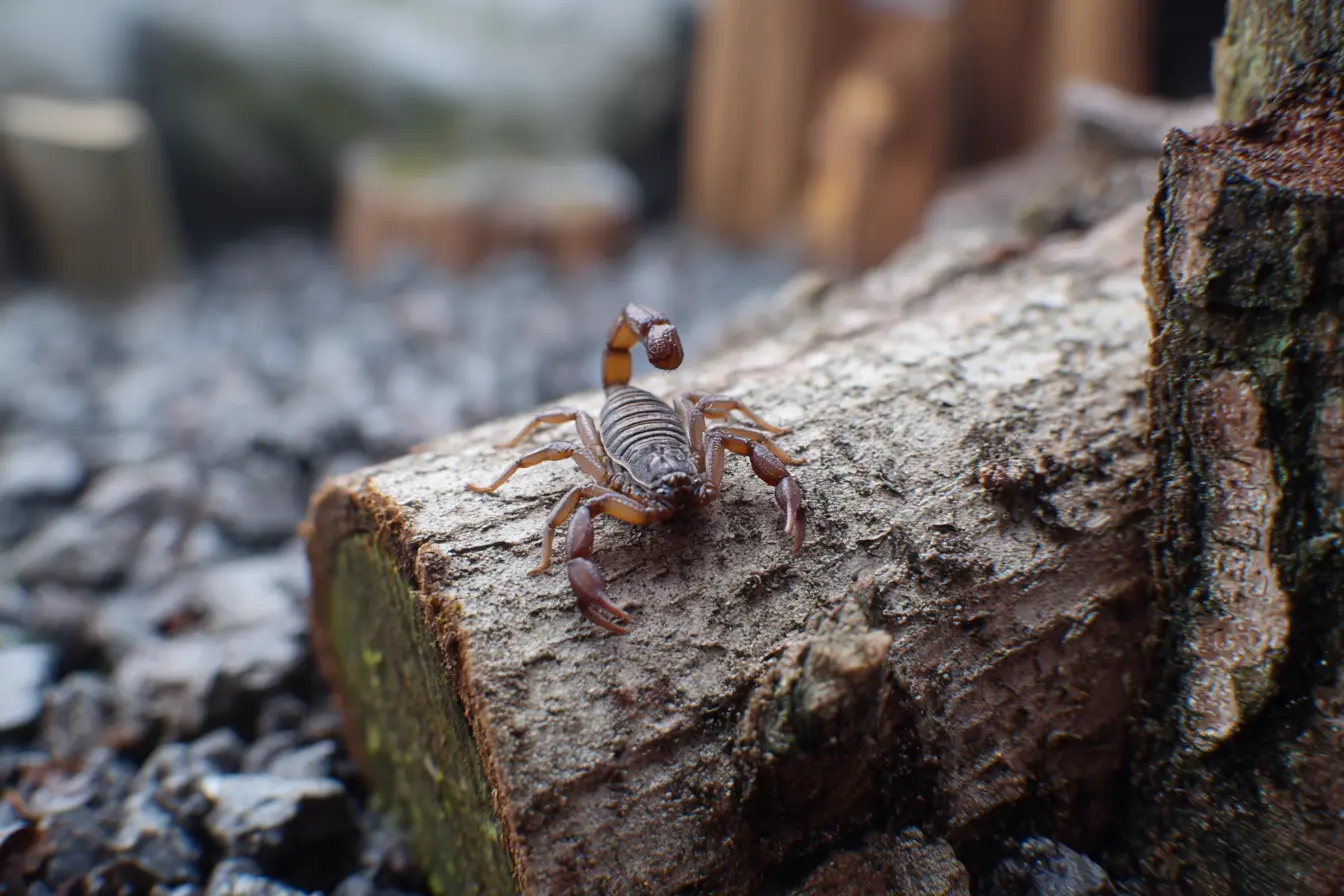
The Pygmy Wood Scorpion (Babycurus jacksoni) is a small, beautifully patterned scorpion native to parts of East Africa, particularly Tanzania and Kenya. Despite its modest size, this species is highly sought after in the hobby due to its active behaviour, striking colouration, and relatively mild venom.
Ideal for keepers who enjoy observing natural behaviour rather than sheer size or intimidation factor, the Pygmy Wood Scorpion is an engaging and underrated species that thrives when housed correctly.
Why Choose a Pygmy Wood Scorpion?
This species is well suited to beginners and intermediate keepers looking for something a little different from the larger forest scorpions.
- Compact Size: Adults typically reach only 4–5 cm, making them ideal for smaller enclosures.
- Active and Visible: More surface-active than many scorpions, especially at night.
- Attractive Colouration: Often displays orange, tan, brown, or banded markings.
- Mild Venom: Generally comparable to a mild bee sting for most people.
While small, this species has a big personality and is surprisingly bold.
Housing Your Pygmy Wood Scorpion
Enclosure
A secure, well-ventilated enclosure that mimics woodland conditions is essential.
- Size: A 15x15x15 cm enclosure is sufficient for a single adult.
- Security: Due to their small size, enclosures must be escape-proof with fine ventilation.
- Substrate: Use 5–8 cm of substrate such as coconut fibre, soil, or a soil–leaf litter mix.
- Ventilation: Moderate to high ventilation to prevent stagnant, overly humid air.
This species is terrestrial and semi-fossorial, often hiding under cover rather than deep burrowing.
Decor and Hiding Spots
- Cork Bark Flats or Chips: Essential for providing hiding places.
- Leaf Litter: Encourages natural behaviour and humidity retention.
- Small Pieces of Wood or Bark: Create natural cover and ambush points.
Avoid heavy decor that could shift or collapse.
Temperature and Humidity
The Pygmy Wood Scorpion thrives in warm, slightly humid conditions.
- Temperature: 22–26°C, with a gentle drop at night.
- Heating: Usually not required in warm homes; a heat mat on the side can be used if needed.
- Humidity: 60–70% is ideal. Keep part of the substrate lightly moist while allowing drier areas.
Never allow the enclosure to become waterlogged.
Feeding Your Pygmy Wood Scorpion
Diet
Due to their small size, prey must be appropriately scaled.
- Small Crickets
- Micro Roaches
- Fruit Flies (for juveniles)
- Small Mealworms (occasionally)
Feed adults once every 5–7 days. Juveniles may be fed every 3–5 days. Remove uneaten prey within 24 hours to avoid stress or injury.
Water
Despite their size, hydration is important.
- Provide a very shallow water dish with pebbles or sand.
- Alternatively, lightly mist one corner of the enclosure once or twice a week.
Avoid increasing overall humidity just to provide water.
Handling and Temperament
Handling is not recommended, though this species is not considered dangerous.
- Fast and Agile: Can dart quickly when disturbed.
- Defensive Rather Than Aggressive: Prefers to flee or hide.
- Mild Venom: Stings are uncommon and usually result in mild, localised pain.
For enclosure maintenance, use soft forceps or a catch cup rather than hands.
Health and Common Issues
When kept correctly, Pygmy Wood Scorpions are hardy and long-lived for their size.
Potential issues include:
- Dehydration: Caused by overly dry enclosures.
- Excess Moisture: Can lead to mould or mite problems.
- Stress: From excessive disturbance or lack of hiding spots.
Moulting
Before moulting, the scorpion may:
- Refuse food.
- Hide more frequently.
- Become sluggish.
Do not disturb the scorpion during this time. Ensure water is available and avoid feeding until several days after the moult.
Legal and Ethical Considerations
- Pygmy Wood Scorpions are legal to keep in the UK.
- Always purchase from reputable breeders or specialist invertebrate sellers.
- Avoid wild-caught specimens where possible.
This species is solitary and should always be housed individually.
Cost of Ownership
The Pygmy Wood Scorpion is inexpensive and easy to maintain.
- Scorpion: £15–£35.
- Enclosure Setup: £25–£50.
- Food: £3–£8 per month.
- Utilities: Minimal.
Conclusion
The Pygmy Wood Scorpion is a fantastic choice for keepers who appreciate subtle beauty, active behaviour, and manageable care requirements. Its small size makes it accessible, while its bold personality and frequent surface activity keep it endlessly interesting to observe.
Though not a handling pet, the Pygmy Wood Scorpion thrives when given a well-structured, naturalistic enclosure and minimal disturbance. With proper care and respect, this tiny scorpion can be a standout addition to any invertebrate collection.
Quick questions
- What should I know about pygmy wood scorpion?
- The Pygmy Wood Scorpion (Babycurus jacksoni) is a small scorpion from East Africa, popular for its active nature and mild venom. Ideal for beginners, it only grows to 4-5 cm, needing a small, escape-proof enclosure. Keep it in. Vet Verified can help you compare UK veterinary practices by location, species, services and opening hours before you call.
- When should I contact a vet about pygmy wood scorpion?
- Contact a veterinary practice if your pet seems unwell, symptoms are getting worse, you are unsure what to do, or the situation may be urgent. Vet Verified helps you compare practice details, but a vet should advise on your pet's current care.
- Can Vet Verified help me find exotic vets?
- Yes. Use Vet Verified to compare exotic vets across the UK, then check practice profiles and call directly to confirm current availability.
Find a vet
Need a vet for this?
Use Vet Verified to compare UK veterinary practices that match this topic, then call the practice directly to confirm current services and availability.
Search by species
Urgent and out-of-hours
- 24-hour vets Find UK veterinary practices with 24-hour opening signals in the directory. Compare profiles, contact details, opening hours and verification signals.
- Emergency vets Find UK veterinary practices with emergency-period signals in the directory. Compare profiles, contact details, opening hours and verification signals.