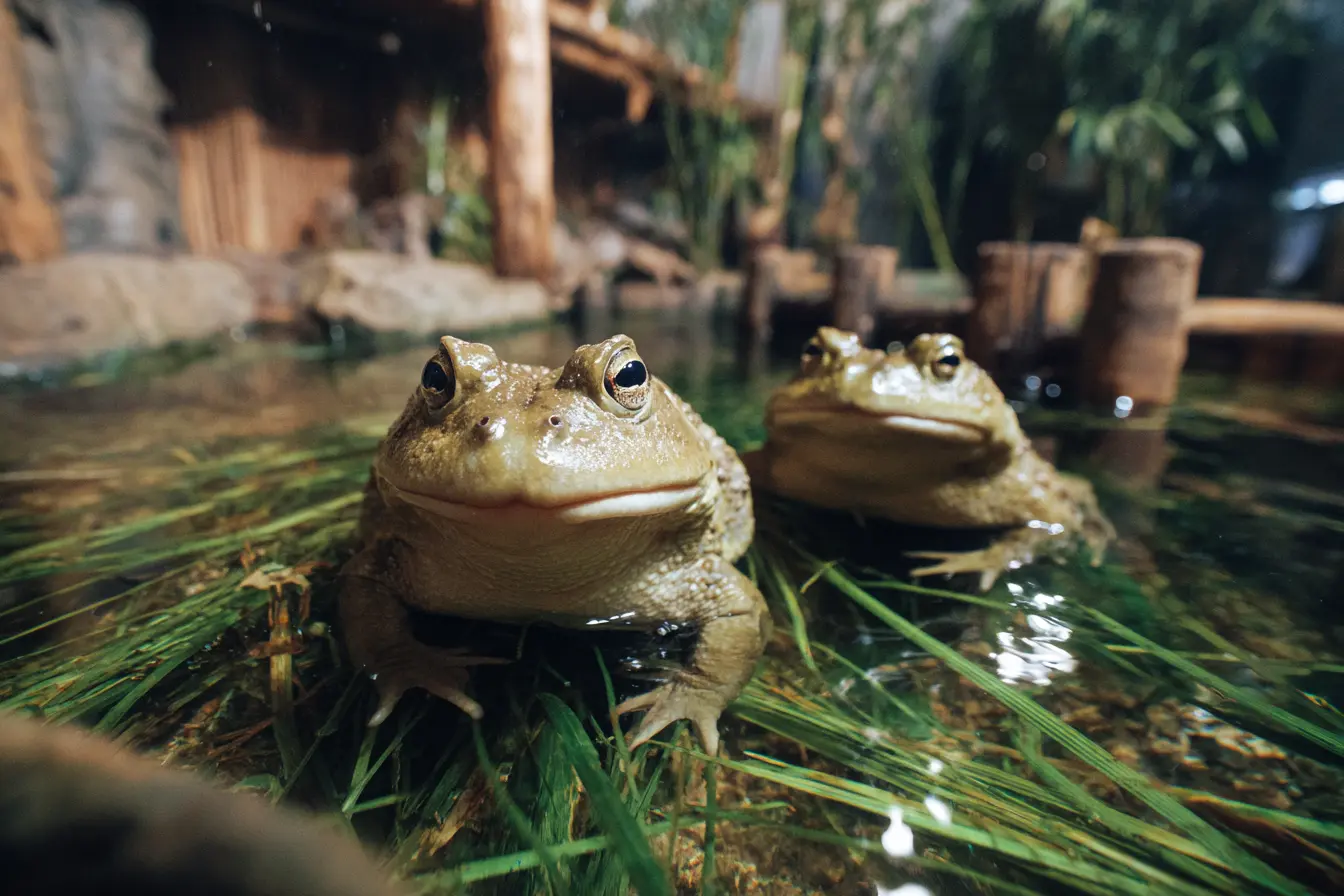
African Bullfrogs (Pyxicephalus adspersus), also known as Pixie Frogs, are one of the largest and most robust amphibians in the world. With their impressive size, voracious appetite, and unique behaviours, these frogs make fascinating pets for experienced keepers. However, they require significant space, proper diet management, and careful handling due to their aggressive feeding response.
This guide covers everything you need to know about keeping an African Bullfrog in captivity.
Physical Characteristics
Size
- Males typically grow to 18 to 25 cm (7 to 10 inches) and can weigh over 1.5 kg (3.3 lbs).
- Females are significantly smaller, reaching 10 to 15 cm (4 to 6 inches).
- Juveniles start out as 2 to 3 cm (1 inch) and grow rapidly.
Lifespan
With proper care, African Bullfrogs can live for 20 to 30 years, making them a long-term commitment.
Colouration And Skin Texture
- Their bodies are usually green or olive with a lighter, cream-coloured belly.
- Males tend to have a bright yellow-orange throat, while females and juveniles have a paler throat.
- Their skin is thick and bumpy, helping them retain moisture.
Differences Between Males And Females
- Males are much larger than females and have a more prominent, muscular build.
- Males develop a deep, resonating call, while females remain silent.
- During the breeding season, males can become territorial and aggressive.
Legal Considerations And Ethics
Before acquiring an African Bullfrog, check local wildlife laws regarding amphibian ownership. These frogs should always be purchased from reputable breeders rather than taken from the wild.
Although they can be engaging to watch, African Bullfrogs are not ideal for handling due to their strong bite and the risk of stress.
Housing And Enclosure Setup
African Bullfrogs require a large and secure enclosure that accommodates their semi-terrestrial lifestyle.
Tank Size And Setup
- A single adult requires a minimum of a 110-litre (30-gallon) tank, but a larger space is preferred.
- A wide and shallow enclosure is better than a tall one, as these frogs are not strong climbers.
- A secure lid is necessary to prevent escapes.
Substrate
- Use moisture-retaining substrate such as coconut fibre, organic topsoil, or a mix of both.
- Ensure the substrate is at least 10 cm (4 inches) deep to allow for burrowing.
- Avoid gravel or other hard materials that could cause injury or impaction if swallowed.
Water Requirements
- Provide a large, shallow water dish that is easy to access and allows the frog to soak fully.
- Change the water daily to prevent bacterial growth.
- Use dechlorinated water, as tap water chemicals can be harmful.
Temperature And Humidity
- Maintain a temperature range of 24 to 28°C (75 to 82°F).
- A slight nighttime drop to 21°C (70°F) is acceptable.
- Humidity should be kept at 50 to 80 percent, with regular misting if necessary.
Lighting
- African Bullfrogs do not require UVB lighting, but a low-output UVB bulb can be beneficial.
- Provide a 12-hour day-night light cycle using ambient or artificial lighting.
Hides And Enrichment
- Provide cork bark, plants, or logs as hiding spots to reduce stress.
- A bioactive setup with live plants and clean-up crew organisms can help maintain a naturalistic environment.
Diet And Feeding
African Bullfrogs are voracious eaters and require a diet of high-quality animal protein. Their food should be appropriately sized to prevent choking or digestive issues.
Suitable Food Items
- Earthworms
- Crickets
- Dubia roaches
- Locusts
- Black soldier fly larvae
- Small fish (occasionally)
- Pinky mice (rarely, as too much can cause obesity)
- Frogs and other amphibians (not recommended in captivity due to disease risk)
Feeding Schedule And Portion Sizes
- Juveniles should be fed daily with two to four small insects per feeding.
- Sub-adults should be fed every other day with three to five medium-sized food items.
- Adults should be fed every three to four days with larger prey, such as several roaches or a single appropriately sized rodent.
- Overfeeding should be avoided, as obesity is a common problem.
Supplements
- Dust food with a calcium supplement once a week.
- Provide a multivitamin supplement every two weeks.
Handling And Behaviour
African Bullfrogs have a strong feeding response and can mistake fingers for food. They should not be handled frequently, as this can cause stress and potential bites.
Common Behaviours
- They spend much of their time buried in the substrate, waiting for prey.
- They can inflate their bodies and make defensive hissing noises when threatened.
- Males are known to be aggressive, especially during breeding season.
Health And Common Issues
These frogs are hardy but can suffer from health problems if their environment is not properly maintained.
Common Health Issues
- Bloating – Can indicate bacterial infections or improper diet.
- Skin infections – Often caused by poor substrate hygiene or unclean water.
- Metabolic bone disease – Results from calcium deficiency and improper supplementation.
- Obesity – Overfeeding or an improper diet can lead to excessive weight gain.
- Impaction – Caused by swallowing substrate or prey that is too large.
Preventative Care
- Maintain clean water with regular changes.
- Feed a varied diet with appropriate supplementation.
- Monitor for signs of illness or abnormal behaviour.
Brumation And Seasonal Changes
In the wild, African Bullfrogs enter a state of dormancy during the dry season. In captivity, this is not necessary unless attempting to breed them.
- If temperatures drop, they may burrow deep into the substrate and form a protective cocoon.
- To simulate brumation, gradually lower temperatures and reduce feeding before bringing them back to normal conditions over time.
Breeding African Bullfrogs
Breeding in captivity is challenging and requires controlled environmental changes.
Triggers For Breeding
- Simulate a dry season by gradually reducing humidity and misting.
- Introduce a water-filled breeding area and raise humidity to mimic the rainy season.
- Males will start calling and defending territory.
Egg Laying And Tadpoles
- Females lay thousands of eggs in shallow water.
- Eggs hatch within two days, and tadpoles develop into froglets within three to four weeks.
- Tadpoles are highly carnivorous and will eat each other if not separated or well-fed.
Conclusion
African Bullfrogs are fascinating and rewarding pets, but they require proper care, a suitable environment, and careful feeding management. Their large size, aggressive feeding habits, and long lifespan make them best suited for experienced amphibian keepers.
With the right setup and care, these powerful frogs can thrive in captivity for decades, providing a unique and engaging experience for their keepers.
Quick questions
- What should I know about african bullfrogs?
- Learn about caring for African Bullfrogs, also known as Pixie Frogs. These large amphibians need a spacious enclosure with moisture-retaining substrate and regular water changes. Keep the temperature between 24-28°C with high. Vet Verified can help you compare UK veterinary practices by location, species, services and opening hours before you call.
- When should I contact a vet about african bullfrogs?
- Contact a veterinary practice if your pet seems unwell, symptoms are getting worse, you are unsure what to do, or the situation may be urgent. Vet Verified helps you compare practice details, but a vet should advise on your pet's current care.
- Can Vet Verified help me find exotic vets?
- Yes. Use Vet Verified to compare exotic vets across the UK, then check practice profiles and call directly to confirm current availability.
Find a vet
Need a vet for this?
Use Vet Verified to compare UK veterinary practices that match this topic, then call the practice directly to confirm current services and availability.