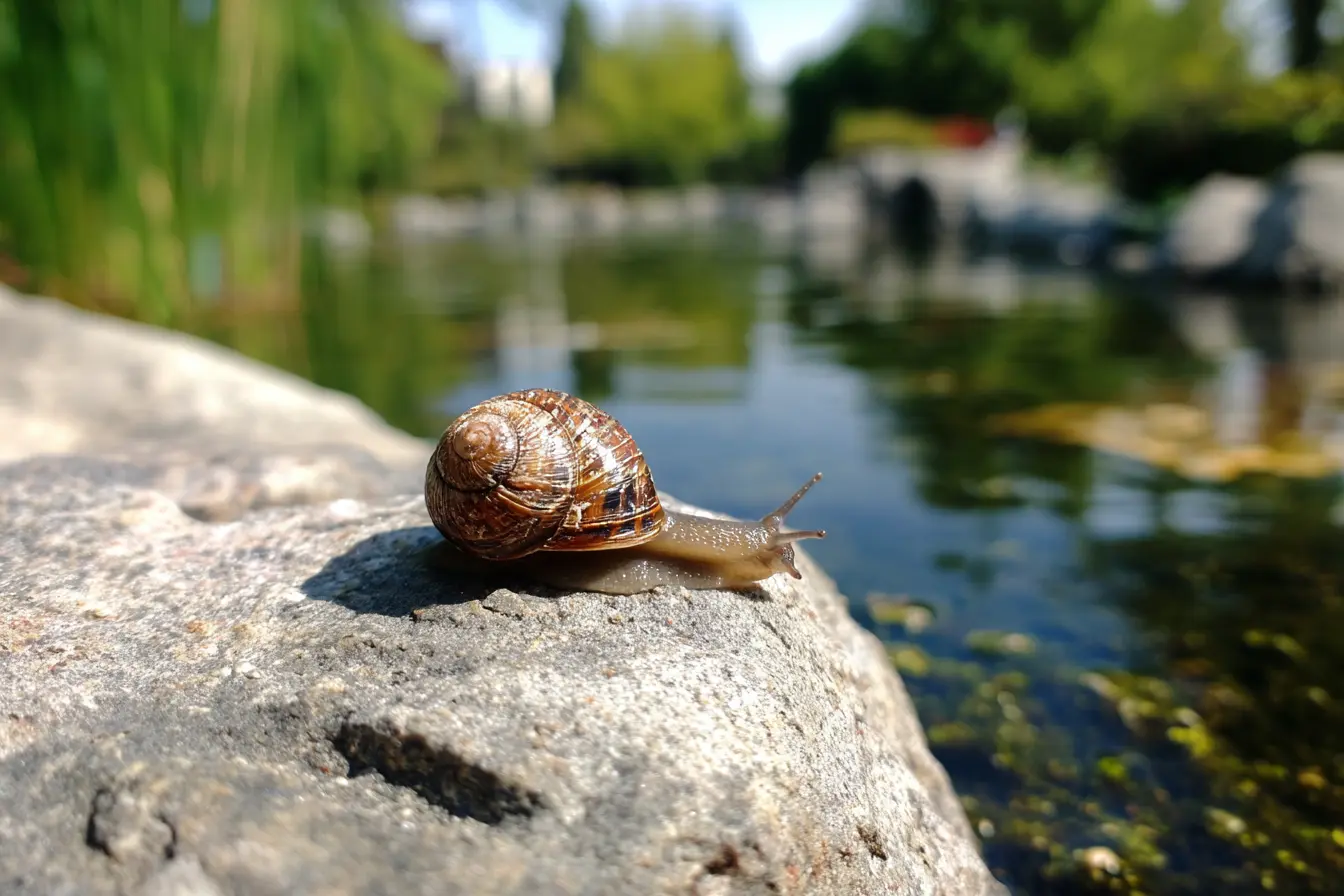
Snails are an often-overlooked but fascinating part of a garden pond. These small, peaceful invertebrates help maintain water quality and contribute to a thriving ecosystem. With their slow, deliberate movements and unique shapes, pond snails can be a joy to watch and play an important role in the balance of your pond. Here’s everything you need to know about keeping snails in your pond.
What Types of Snails Can You Keep?
Several types of freshwater snails are well-suited to ponds in the UK:
- Ramshorn Snails – Recognisable by their flat, coiled shells, they’re efficient algae grazers.
- Pond Snails (Lymnaea stagnalis) – Larger snails with pointed shells that are good at cleaning up detritus.
- Trapdoor Snails (Viviparus viviparus) – Live-bearing snails with operculum “trapdoors” that help prevent overpopulation.
- Bladder Snails (Physella acuta) – Small snails that thrive in natural, wildlife-friendly ponds.
These snails are generally peaceful and easy to care for.
Benefits of Keeping Snails
- Algae Control – Many pond snails graze on algae and biofilm, helping to keep the pond clean.
- Natural Waste Removal – Snails consume decaying plant matter and leftover fish food.
- Biodiversity – Snails support a balanced pond ecosystem and provide food for birds and some fish.
- Visual Interest – Their slow, graceful movements add a calming touch to the pond.
Pond Requirements for Snails
Pond Size and Depth
Snails can thrive in ponds of all sizes, from small container ponds to large garden ponds:
- Size: No specific minimum – even small ponds can support a healthy snail population.
- Depth: At least 45 cm (18 inches) helps maintain stable temperatures and oxygen levels.
Habitat and Substrate
Snails love ponds with natural features:
- Substrate: Sand, gravel, or fine pond soil is perfect for snails to move and graze.
- Plants: Submerged plants (like hornwort and elodea) and marginal plants (like water mint and marsh marigold) provide surfaces to graze and shelter.
- Natural shelter: Rocks, logs, and plant roots give snails hiding spots and microhabitats.
Filtration and Oxygenation
While snails help with water cleaning, a filter is still recommended:
- Filtration: Removes excess waste and keeps water clean.
- Aeration: Waterfalls, fountains, or air stones help maintain oxygen levels, especially in warm weather.
Water Quality
Good water quality is essential for snails:
- pH: Between 7.0 and 8.0.
- Ammonia and nitrite: Should be zero.
- Nitrate: Keep below 40 ppm to discourage algae blooms.
Regular testing and partial water changes (10–20%) as needed will keep your pond healthy for snails and other pond life.
Feeding Snails
Snails generally feed themselves by grazing on:
- Algae and biofilm: Naturally occurring on rocks, plant stems, and pond edges.
- Decaying plant matter: Fallen leaves and dying pond plants.
- Leftover fish food: Sinking pellets and fish waste are scavenged by snails.
Supplemental feeding is usually unnecessary in a natural pond, but you can occasionally offer blanched leafy greens (like spinach or lettuce) to support nutrition.
Seasonal Care
Spring
- Check snail population: Remove any dead snails to avoid polluting the water.
- Clean and prune plants: Healthy plant growth supports snails’ natural feeding.
Summer
- Provide shade: Floating plants help reduce water temperature and algae growth.
- Monitor oxygen levels: Warm water can hold less oxygen, so maintain good aeration.
Autumn
- Reduce organic debris: Remove fallen leaves and decaying plant material.
- Watch for overpopulation: In nutrient-rich ponds, snail populations can boom.
Winter
- Snail slowdown: Snails become less active in cold water and may rest at the bottom.
- No feeding needed: They’ll rely on natural algae and debris if active at all.
- Avoid disturbing the pond bottom: Let snails rest undisturbed through the winter.
Managing Snail Populations
Snails reproduce rapidly in nutrient-rich ponds. While a healthy population is good, too many snails can become a problem:
- Avoid overfeeding fish: Excess fish food fuels snail booms.
- Encourage predators: Fish like tench and loaches will eat snails and help control numbers.
- Regular monitoring: Remove excess snails by hand if necessary to maintain balance.
Health and Common Issues
Pond snails are hardy but can suffer if water quality declines:
- Soft shells: Often due to low calcium or poor water conditions.
- Lethargy or dead snails: Check water parameters and oxygen levels.
- Excess algae: Indicates too many nutrients – consider adding more plants to absorb them.
Regular maintenance and balanced feeding will prevent most issues.
Introducing Snails to Your Pond
When adding new snails:
- Acclimatise slowly: Float the transport bag in your pond for 15–20 minutes to match temperatures.
- Release gently: Snails will slowly explore and find suitable spots to settle.
Be careful not to introduce invasive species or parasites – always source snails from reputable, biosecure suppliers.
Supporting a Balanced Pond Ecosystem
Snails work best in a balanced, wildlife-friendly pond:
- Provide diverse habitats: Marginal and submerged plants, rocks, and logs.
- Encourage biodiversity: Snails support small invertebrates, frogs, and insects.
- Monitor populations: Keep an eye on balance to prevent algae or snail booms.
Conclusion
Snails are a valuable part of a pond’s natural ecosystem. With good water quality, a healthy habitat, and a little monitoring, these fascinating invertebrates will thrive and help keep your pond clean and balanced.
Quick questions
- What should I know about snails?
- Learn about the benefits of keeping pond snails in UK gardens. These small creatures help clean and balance the pond by controlling algae, removing waste, and supporting biodiversity. Ideal snails for ponds include Ramshorn,. Vet Verified can help you compare UK veterinary practices by location, species, services and opening hours before you call.
- When should I contact a vet about snails?
- Contact a veterinary practice if your pet seems unwell, symptoms are getting worse, you are unsure what to do, or the situation may be urgent. Vet Verified helps you compare practice details, but a vet should advise on your pet's current care.
- Can Vet Verified help me find bird vets?
- Yes. Use Vet Verified to compare bird vets across the UK, then check practice profiles and call directly to confirm current availability.
Find a vet
Need a vet for this?
Use Vet Verified to compare UK veterinary practices that match this topic, then call the practice directly to confirm current services and availability.