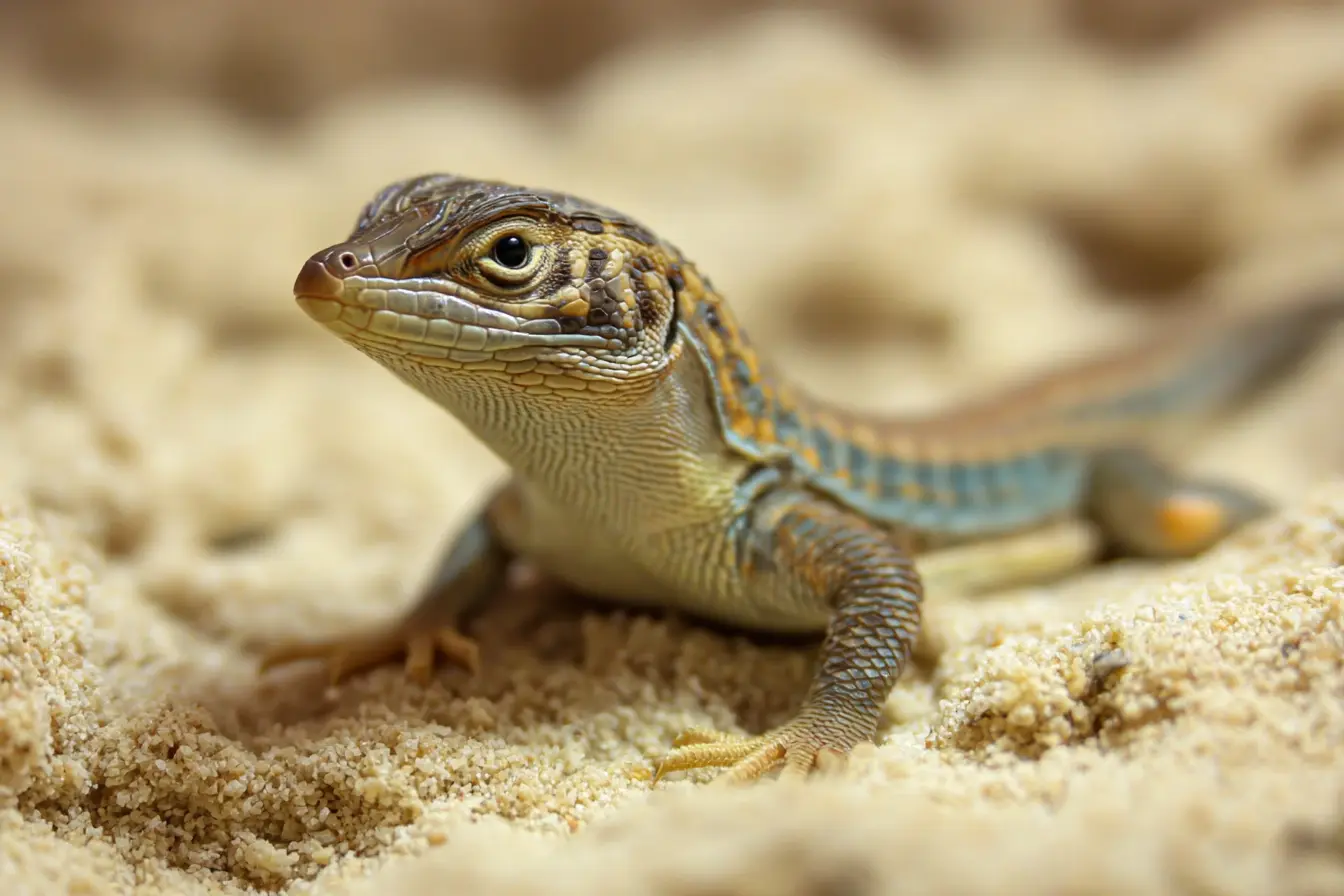
Bosc’s Fringe-Toed Lizard (Acanthodactylus boskianus) is a fast, alert, and beautifully adapted reptile built for life on scorching sand and stone. Named after the naturalist Louis Augustin Guillaume Bosc, this species is one of the most widespread and recognisable fringe-toed lizards of North Africa and the Middle East.
With its slender build, long limbs, and distinctive fringed toes designed for running across loose sand, this lizard embodies desert efficiency. Active, hardy, and endlessly watchable, Bosc’s Fringe-Toed Lizard makes an excellent display species for keepers interested in arid-environment reptiles.
Origins and Natural Habitat
Bosc’s Fringe-Toed Lizard is found across a wide range of habitats stretching from North Africa through the Middle East, including Egypt, Morocco, Tunisia, Israel, Jordan, and parts of the Arabian Peninsula.
It inhabits deserts, semi-deserts, sandy plains, rocky scrubland, and dry wadis. These regions are characterised by intense sunlight, low rainfall, and dramatic temperature fluctuations between day and night.
In the wild, this species is diurnal and highly active, spending much of the day running between basking sites, foraging areas, and shallow burrows. Its fringed toes increase surface area, allowing it to sprint across hot sand without sinking, an adaptation that gives the genus Acanthodactylus its name (“spiny fingers”).
Appearance and Temperament
Physical Traits
- Size: 18–25 cm in total length, including the tail
- Build: Slim and athletic, with long legs built for speed
- Colouration: Sandy beige, grey, or tan with darker striping or spotting; underside pale or white
- Toes: Distinctive fringed scales along the toes, aiding movement on loose substrates
- Tail: Long and whiplike, used for balance during rapid movement
Behaviour and Temperament
Bosc’s Fringe-Toed Lizards are extremely alert and fast-moving. They rely on speed and awareness rather than aggression and will retreat quickly if startled.
In captivity, they remain active and inquisitive, often basking openly once settled. They are not suitable for handling and should be kept as observation animals. Their constant movement, hunting behaviour, and basking routines make them fascinating to watch.
Housing Requirements
This species thrives in a spacious, well-ventilated arid vivarium that prioritises floor space and strong lighting.
Enclosure Size
- Single adult: Minimum 90 cm x 45 cm x 45 cm
- Pair or small group (1 male with 2–3 females): 120 cm x 60 cm x 60 cm
Horizontal space is far more important than height. Front-opening enclosures help reduce stress during maintenance.
Heating and Temperature Gradient
- Basking spot: 38–42°C
- Warm zone: 30–32°C
- Cool zone: 24–26°C
- Night-time: Drop to 18–22°C
Use a bright basking lamp positioned over a flat stone or raised platform. High temperatures are essential for digestion and activity.
Lighting and UVB
Strong UVB lighting (10–12%) is essential for calcium metabolism and overall health. As a sun-loving desert species, Bosc’s Fringe-Toed Lizard benefits greatly from intense, bright lighting.
Provide full-spectrum daylight lighting alongside UVB and maintain a 12–14 hour photoperiod during summer months, reducing slightly in winter.
Humidity and Water
This species requires low humidity, ideally between 20–40%.
- Provide a shallow water dish, refreshed daily
- Light misting once weekly is sufficient, mainly to support shedding
Excess humidity should be avoided, as it can lead to respiratory issues.
Substrate and Furnishings
- Substrate: Fine sand or a sand-soil mix suitable for digging
- Depth: 5–10 cm to allow shallow burrowing
- Decor: Flat basking stones, cork bark, rocks, and low scrub-style hides
- Hides: At least two, positioned at different temperature zones
The enclosure should feel open, with clear sight lines and multiple basking options.
Diet and Feeding
Bosc’s Fringe-Toed Lizards are insectivorous, feeding on a wide range of small invertebrates.
Feeding Schedule
- Juveniles: Daily
- Adults: Every other day
Food Items
- Crickets
- Locusts
- Small roaches
- Mealworms or morio worms (occasional treats)
- Silkworms
All prey should be gut-loaded and appropriately sized.
Supplementation
- Calcium without D3: At most feeds
- Calcium with D3: Once weekly
- Multivitamin: Once weekly
Offer food during the warmest part of the day when activity levels are highest.
Handling and Interaction
Handling is not recommended. These lizards are extremely fast and easily stressed, and dropped tails are a risk if they are restrained.
If handling is unavoidable for health checks or enclosure maintenance:
- Move slowly and calmly
- Guide rather than grab
- Keep interactions brief
Most individuals become confident display animals when left undisturbed.
Common Health Concerns
Metabolic Bone Disease (MBD)
Caused by insufficient UVB or calcium. Prevented with strong lighting and correct supplementation.
Dehydration
Ensure fresh water is always available, even in arid setups.
Parasites
Wild-caught specimens may carry internal parasites. A veterinary health check is strongly advised for new animals.
Tail Loss
Can occur if the lizard is severely stressed. Minimise handling and sudden disturbances.
Lifespan and Breeding
With proper care, Bosc’s Fringe-Toed Lizards can live 5–8 years in captivity.
Breeding is achievable for experienced keepers. Males become more territorial and active during the breeding season. Females lay small clutches of eggs in warm, sandy substrate. Incubation at 28–30°C typically lasts 6–8 weeks.
Observation and Enrichment
This species excels as a display lizard, offering constant activity and natural behaviour.
Enrichment ideas include:
- Multiple basking sites
- Rearranging rocks and hides occasionally
- Varying prey types and feeding locations
Their speed, alert posture, and sun-basking routines make them highly engaging to observe.
Conclusion
Bosc’s Fringe-Toed Lizard is a superb example of desert adaptation: fast, resilient, and perfectly suited to life under intense heat and light. While not a species for handling, it rewards keepers with constant activity and fascinating natural behaviours.
Quick questions
- What should I know about bosc’s fringe-toed lizard?
- Bosc's Fringe-Toed Lizard, named after naturalist Louis Bosc, is a quick and hardy reptile found in North Africa and the Middle East. Known for its fringed toes that help it move on sand, this lizard thrives in deserts and. Vet Verified can help you compare UK veterinary practices by location, species, services and opening hours before you call.
- When should I contact a vet about bosc’s fringe-toed lizard?
- Contact a veterinary practice if your pet seems unwell, symptoms are getting worse, you are unsure what to do, or the situation may be urgent. Vet Verified helps you compare practice details, but a vet should advise on your pet's current care.
- Can Vet Verified help me find exotic vets?
- Yes. Use Vet Verified to compare exotic vets across the UK, then check practice profiles and call directly to confirm current availability.
Find a vet
Need a vet for this?
Use Vet Verified to compare UK veterinary practices that match this topic, then call the practice directly to confirm current services and availability.