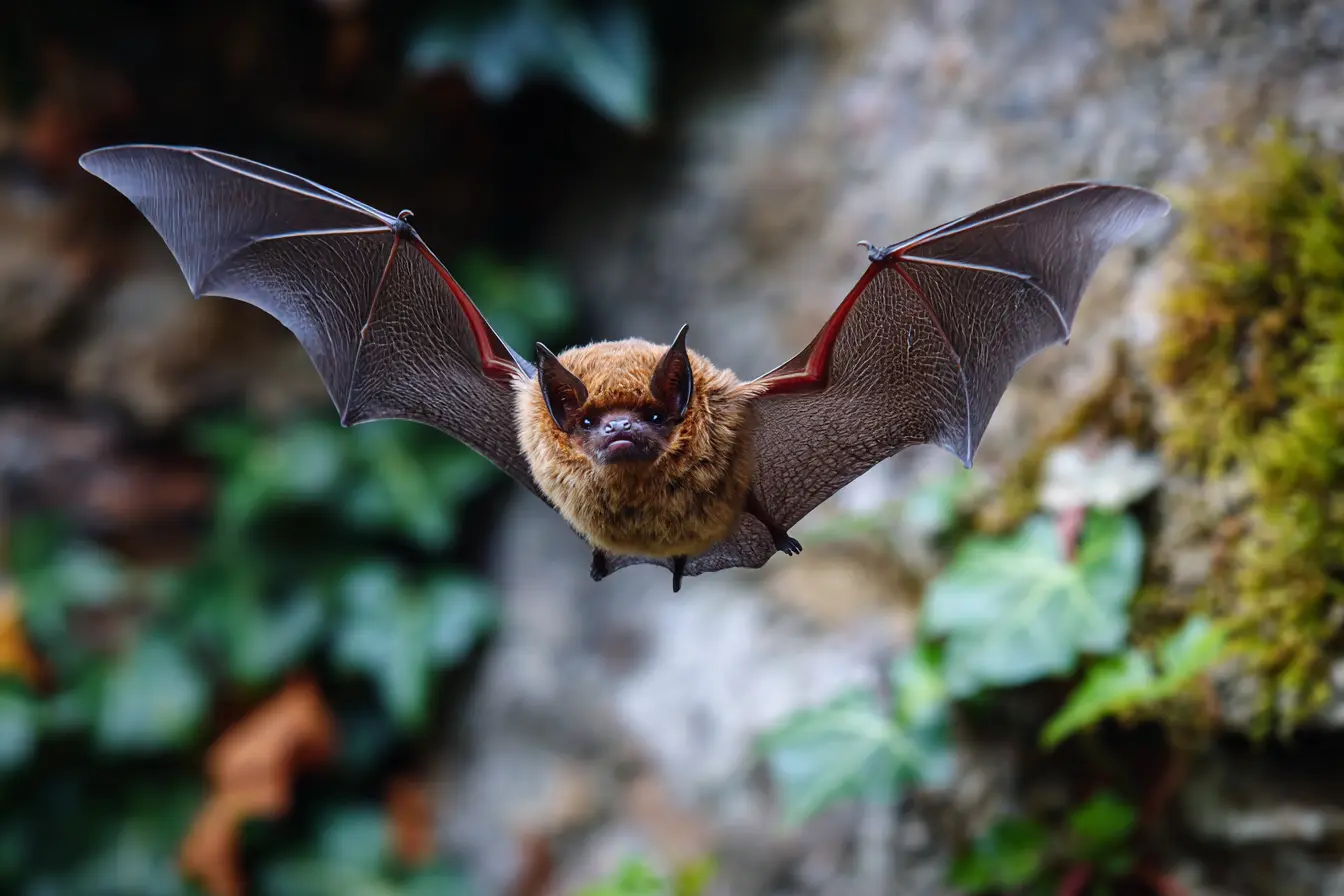
Bats are some of the most remarkable and misunderstood mammals in the UK. As the only true flying mammals, they fill an essential niche in the ecosystem, feeding on insects and helping to regulate pest populations. Despite being nocturnal and elusive, bats are widespread across Britain and often found closer to home than people realise—in woodlands, parks, churches, barns, and even urban gardens.
This blog post explores the fascinating world of UK bats, covering their appearance, species diversity, habitats, behaviour, diet, reproduction, threats, and their crucial role in our ecosystems.
Overview: Bats in Britain
There are 18 species of bats in the UK, all of which are protected by law. They belong to the order Chiroptera, meaning "hand-wing", and are divided into two main groups: the vesper bats (evening bats) and the horseshoe bats.
Common UK bat species
- Common pipistrelle – The most widespread bat in the UK; often roosts in buildings and feeds on small insects.
- Soprano pipistrelle – Almost identical to the common pipistrelle but echolocates at a higher frequency.
- Brown long-eared bat – Known for its large ears and fluttery flight; often forages within woodland.
- Noctule bat – One of the largest UK bats; fast, high-flying, and often seen around sunset.
- Daubenton’s bat – A medium-sized bat that hunts over water using its feet to snatch insects.
- Natterer’s bat – A woodland species that often forages close to vegetation.
- Lesser horseshoe bat – Small and rare, with a distinctive horseshoe-shaped nose; roosts in caves and old buildings.
- Greater horseshoe bat – One of the rarest UK mammals; found mainly in southwest England and south Wales.
Identification and Appearance
Bats can be difficult to identify in flight, but their silhouettes, flight patterns, and echolocation calls help distinguish them.
Key features:
- Small furry bodies, ranging from 3–8 cm in length.
- Wings made from a double layer of skin stretched over elongated fingers.
- Large ears (in some species) for precise hearing.
- Tail membranes used for agility in flight or capturing prey.
- Colour varies from reddish-brown to grey depending on the species.
Bats do not get tangled in hair, nor are they blind—these are common myths. In fact, many species have excellent low-light vision and rely on echolocation to navigate.
Habitats and Roosting Sites
Bats are highly adaptable and use a variety of roosts depending on the season and species.
Common roosting sites:
- Hollow trees and loose bark
- Roof spaces and eaves
- Caves and tunnels
- Old barns, churches, and outbuildings
- Bat boxes
- Bridges and culverts
Roosts are used for resting, breeding, or hibernating. Bats often switch between multiple roosts throughout the year.
Behaviour and Lifestyle
Bats are nocturnal, emerging at dusk to feed. They are highly social animals and may roost in colonies of several dozen to hundreds of individuals.
Key behaviours:
- Echolocation: Bats emit high-frequency calls and interpret the echoes to "see" their environment in the dark.
- Flight patterns: Vary by species—some swoop high over trees, others skim over water or flutter close to hedgerows.
- Seasonal movements: Some bats migrate short distances or move between summer and winter roosts.
Bats hibernate through the coldest months, from roughly November to March, conserving energy by lowering their body temperature and metabolic rate.
Diet and Feeding
All UK bats are insectivorous. They eat thousands of flying insects each night, helping to control pest populations.
Typical prey:
- Midges
- Moths
- Mosquitoes
- Beetles
- Caddisflies
- Mayflies
The pipistrelle bat alone can consume over 3,000 midges in a single night. Their feeding supports biodiversity and benefits agriculture and gardens alike.
Reproduction and Life Cycle
Bats breed once a year, and females form maternity roosts in summer to raise their young.
Breeding facts:
- Mating occurs in autumn; sperm is stored until spring.
- Births usually occur in June or July.
- Each female gives birth to a single pup.
- Pups are weaned and flying by 3–6 weeks old.
- Bats may live over 20 years in the wild.
Maternity roosts are especially vulnerable to disturbance during the breeding season.
Threats and Conservation
All bat species in the UK are protected under the Wildlife and Countryside Act 1981 and the Conservation of Habitats and Species Regulations 2017.
Major threats:
- Loss of roosting sites due to development and building renovations
- Habitat fragmentation and destruction
- Decline in insect populations due to pesticide use
- Disturbance of roosts during hibernation or breeding
- Light pollution disrupting navigation and foraging
Conservation efforts:
- Legal protection of bats and their roosts
- Installation of bat boxes and wildlife-friendly building practices
- Conservation grazing and management of woodlands, hedgerows and wetlands
- Monitoring by groups like the Bat Conservation Trust (BCT)
Bats in Gardens and Urban Areas
Many bats thrive in towns and cities, using buildings for roosting and gardens for feeding.
How to support bats:
- Install bat boxes on trees or buildings
- Create a night-friendly garden by avoiding artificial lighting
- Plant insect-attracting wildflowers and shrubs
- Maintain ponds, hedgerows and compost heaps
- Avoid using pesticides
Even small urban gardens can become vital foraging grounds if managed with wildlife in mind.
Observing Bats in the Wild
Bat watching can be an exciting and rewarding activity, especially on warm summer evenings.
Tips for bat spotting:
- Head out at dusk and watch near trees, ponds or rivers
- Use a bat detector to listen to echolocation calls
- Look for fast, fluttery or swooping flight patterns
- Join local bat walks and surveys hosted by wildlife groups
You don’t need specialist equipment—just patience and a keen eye.
Conclusion
Bats are an essential and captivating part of the UK’s natural heritage. From woodland glades to urban back gardens, these nocturnal insect-hunters enrich our ecosystems and serve as powerful indicators of environmental health.
By protecting roosts, conserving habitats, and encouraging insect-rich environments, we can help ensure that bats continue to thrive across Britain. With a bit of luck and a little twilight patience, you might just catch a glimpse of these acrobatic flyers as they silently swoop across the evening sky.
Quick questions
- What should I know about bats?
- Bats in the UK play a vital role in controlling insect populations and are found in various habitats, including woodlands, urban gardens, and buildings. This article covers the different species, such as the common pipistrelle. Vet Verified can help you compare UK veterinary practices by location, species, services and opening hours before you call.
- When should I contact a vet about bats?
- Contact a veterinary practice if your pet seems unwell, symptoms are getting worse, you are unsure what to do, or the situation may be urgent. Vet Verified helps you compare practice details, but a vet should advise on your pet's current care.
- Can Vet Verified help me find a vet?
- Yes. Use Vet Verified to compare UK veterinary practices by location, species, services and opening hours, then call directly to confirm current availability.
Find a vet
Need a vet for this?
Use Vet Verified to compare UK veterinary practices that match this topic, then call the practice directly to confirm current services and availability.
Find a vet