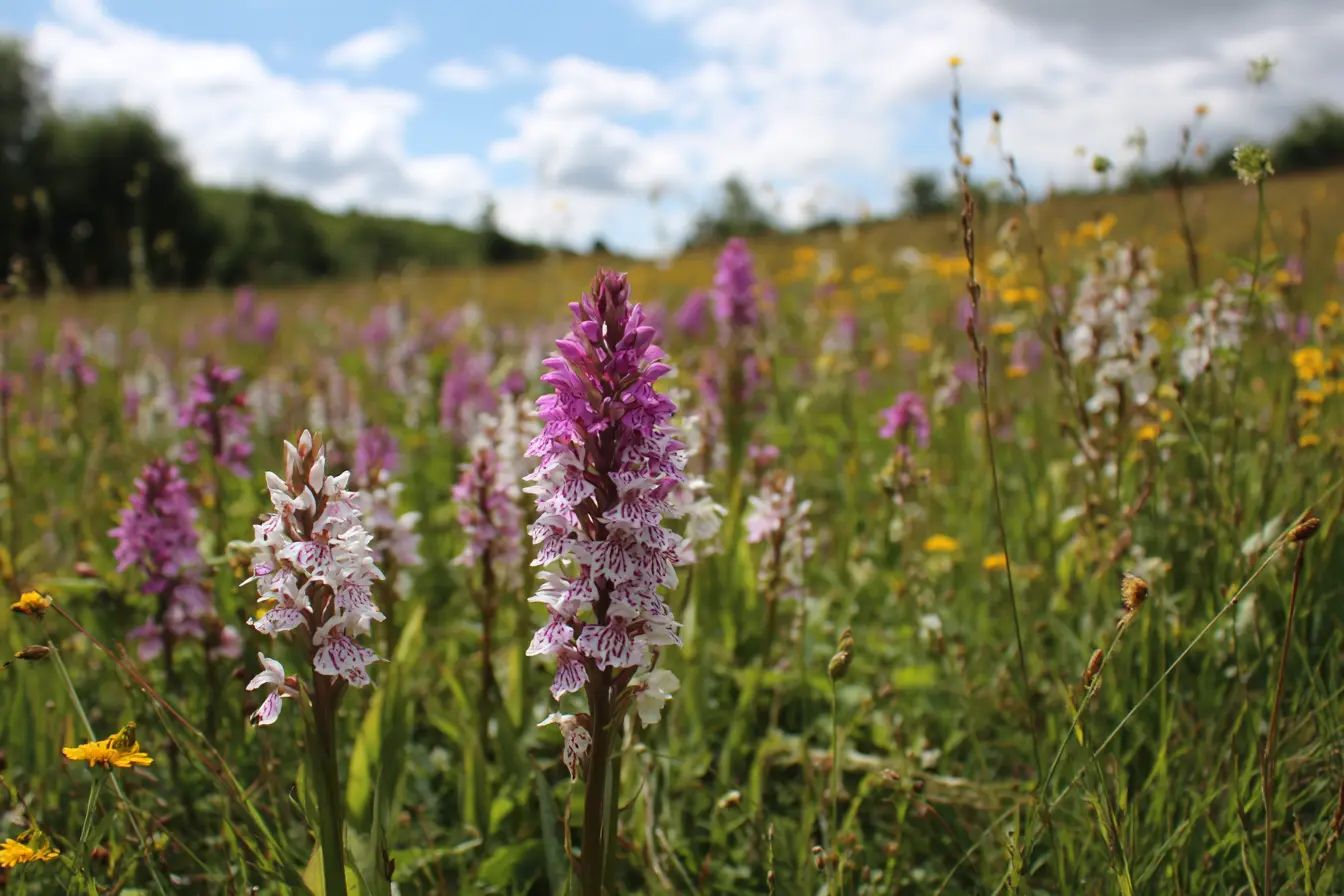
The UK’s countryside is home to an astonishing diversity of wildflowers, many of which are as beautiful and ecologically important as they are underappreciated. Among the most captivating are the native orchids—delicate, elusive plants that thrive in meadows, chalk grasslands, woodlands, and heathland. Alongside them bloom countless other wildflowers, painting the landscape with seasonal colour and supporting rich communities of pollinators and other wildlife.
This post explores the fascinating world of UK orchids and wildflowers, highlighting their habitats, seasonal cycles, ecological value, conservation status, and tips for spotting them in the wild.
What Are Wildflowers?
Wildflowers are native or long-established flowering plants that grow naturally without cultivation. They have adapted to local soils, climates, and ecosystems over centuries, playing a vital role in the health and function of natural habitats.
Common examples
- Cowslip (Primula veris)
- Oxeye daisy (Leucanthemum vulgare)
- Red campion (Silene dioica)
- Cornflower (Centaurea cyanus)
- Lady’s bedstraw (Galium verum)
- Bird’s-foot trefoil (Lotus corniculatus)
These species flourish in a variety of settings—from roadside verges and hedgerows to chalk downs and moorland.
British Orchids: A Hidden Gem
There are over 50 species of wild orchid in the UK, ranging from the subtle to the spectacular. Orchids are perennial herbs with specialised flowers often adapted for specific pollinators. They are sensitive to environmental change, making them key indicators of habitat health.
Notable species
- Bee orchid (Ophrys apifera): Mimics a bee to attract pollinators; found in calcareous grassland.
- Common spotted orchid (Dactylorhiza fuchsii): Widespread in meadows and woods, with pale pink flowers.
- Early purple orchid (Orchis mascula): One of the first orchids to flower in spring.
- Pyramidal orchid (Anacamptis pyramidalis): Distinctive cone-shaped blooms; thrives on chalky soils.
- Heath spotted-orchid (Dactylorhiza maculata): Common in acidic, damp soils of heaths and bogs.
- Marsh orchid group (Dactylorhiza spp.): Several species favouring wet meadows and fens.
Many orchids rely on a symbiotic relationship with soil fungi (mycorrhizae) to germinate and grow, making their ecology both intricate and fragile.
Habitats and Seasonal Blooms
Wildflowers and orchids inhabit a broad range of ecosystems, each with its own seasonal rhythm and floral character.
Habitats
- Chalk and limestone grasslands: Rich in orchids and sun-loving wildflowers.
- Woodland glades: Home to bluebells, wood anemones, and early purple orchids.
- Heathland and moorland: Support heathers, tormentil, and heath orchids.
- Wet meadows and fens: Filled with marsh orchids, ragged robin, and meadowsweet.
- Sand dunes and coastal grasslands: Harbour rare species like dune pansy and sea holly.
Flowering times
- Spring: Primroses, wood sorrel, bluebells, early purple orchids.
- Summer: Poppies, oxeye daisies, knapweed, bee orchids, pyramidal orchids.
- Autumn: Devil’s-bit scabious, autumn lady’s-tresses (a rare late-flowering orchid).
Ecological Importance
Wildflowers and orchids form the backbone of many ecosystems, supporting diverse food webs and maintaining soil and water health.
Key roles
- Pollinator support: Provide nectar and pollen for bees, butterflies, hoverflies and beetles.
- Habitat provision: Shelter and food for insects, birds, and small mammals.
- Soil stabilisation: Roots bind soil and prevent erosion.
- Biodiversity indicators: Their presence often signals low-intensity land use and healthy habitats.
Some orchids have evolved highly specific relationships with their pollinators—such as the fly orchid, which mimics female insects to attract males for pollination.
Threats and Conservation
Despite their beauty and importance, wildflowers and orchids face numerous threats in the modern landscape.
Main threats
- Agricultural intensification and loss of traditional meadow management
- Herbicide and pesticide use
- Overgrazing and neglect of grassland
- Habitat fragmentation
- Climate change altering flowering times and species ranges
Protection and efforts
- Many orchid species are protected under the Wildlife and Countryside Act 1981.
- Conservation projects such as Plantlife’s "Coronation Meadows" aim to restore wildflower-rich meadows.
- Roadside verge management is being improved to allow wildflowers to thrive.
- Citizen science projects track orchid and wildflower populations (e.g. BSBI’s Plant Atlas).
Encouraging traditional hay meadow management—cutting late and removing clippings—helps wildflowers return.
Encouraging Wildflowers at Home
Gardeners and landowners can play a significant role in supporting wildflowers and orchids.
Simple actions
- Sow native wildflower seed mixes in gardens or on community land
- Reduce mowing frequency to allow natural flowering
- Avoid pesticides and artificial fertilisers
- Maintain hedgerows and create habitat corridors
- Support or volunteer with local conservation organisations
With patience, even a small patch of lawn can become a haven for native flora and the wildlife it supports.
Wildlife That Benefit from Orchids and Wildflowers
Wildflowers and orchids are not just beautiful—they are ecological powerhouses that support an astonishing variety of wildlife. Their flowers provide essential resources for pollinators, their foliage offers food for herbivores, and the habitat structure they create supports complex communities of insects, birds, mammals, and reptiles.
Insects and Pollinators
Wildflowers are a lifeline for pollinating insects, many of which are in serious decline across the UK.
- Bees (e.g. bumblebees, solitary bees, honeybees) rely on flowers like knapweed, red clover, vetches, and oxeye daisies for nectar and pollen throughout spring and summer.
- Butterflies and moths such as the common blue, marbled white, six-spot burnet, and chalkhill blue use wildflowers both as nectar sources and larval food plants.
- Hoverflies, beetles and wasps are drawn to open, nectar-rich blooms and help with pollination and pest control.
- Some orchids, like the bee orchid, have evolved remarkable mimicry to attract specific insect species for pollination.
Birds
Wildflower-rich meadows provide nesting sites, insect prey, and seeds for a variety of birds.
- Skylarks, meadow pipits, and yellowhammers nest in grassland habitats and feed on invertebrates supported by wildflower diversity.
- Goldfinches, linnets, and greenfinches feed on seeds from wildflowers such as thistles, dandelions, and teasel.
- Dense herbaceous cover shelters ground-nesting birds from predators.
Mammals
Several small mammals thrive in wildflower-rich environments.
- Hedgehogs forage for beetles, caterpillars, and worms among dense vegetation.
- Field voles and wood mice feed on seeds and provide a prey base for predators like owls and foxes.
- Bats benefit indirectly—by feeding on the insect life that flowers attract.
Amphibians and Reptiles
- Frogs, toads, and newts benefit from wildflower meadows that border ponds and wetlands, offering shade, moisture, and insect-rich feeding grounds.
- Slow worms and grass snakes use rough grassland and flower-rich areas for cover, basking, and hunting invertebrates.
Fungi and Microbes
While often overlooked, wildflower and orchid roots support beneficial soil fungi and microbes.
- Mycorrhizal fungi, essential for orchid germination and growth, form underground networks that help cycle nutrients and water through ecosystems.
- Rich plant diversity supports healthier soil food webs, improving long-term soil fertility and structure.
Wildflowers and orchids are not isolated spectacles—they are keystone components of functioning ecosystems. By supporting them, we support everything from pollinators and songbirds to reptiles, bats, and microbes. In a time of biodiversity loss, wildflower-rich habitats act as life support systems across the British landscape.
Tips for Spotting Orchids and Wildflowers
To enjoy wildflowers and orchids in their natural setting:
- Visit nature reserves, SSSIs (Sites of Special Scientific Interest), and chalk downland in late spring and summer
- Bring a field guide to help with identification
- Walk slowly and observe the ground carefully—many orchids are small or well-camouflaged
- Avoid trampling plants and never pick wildflowers or dig up orchids (which is illegal)
- Take only photos, leave only footprints
Good locations include the South Downs, the Cotswolds, the Yorkshire Dales, the Chilterns, and many community meadows.
Conclusion
Orchids and wildflowers are among the UK’s most exquisite and ecologically valuable plants. From the buzzing life of a summer meadow to the delicate perfection of a bee orchid, they enrich our landscapes and support countless other species.
By valuing, protecting, and restoring the habitats they depend on, we not only preserve their beauty for future generations but also help sustain the health and resilience of the countryside itself. Whether you're a seasoned botanist or a casual rambler, there’s always wonder to be found in the wildflowers underfoot.
Quick questions
- What should I know about wildflowers?
- The UK's countryside boasts a stunning variety of wildflowers and orchids, vital for wildlife and environmental health. Native orchids, found in diverse habitats like meadows and woodlands, are delicate and highly valued, with. Vet Verified can help you compare UK veterinary practices by location, species, services and opening hours before you call.
- When should I contact a vet about wildflowers?
- Contact a veterinary practice if your pet seems unwell, symptoms are getting worse, you are unsure what to do, or the situation may be urgent. Vet Verified helps you compare practice details, but a vet should advise on your pet's current care.
- Can Vet Verified help me find bird vets?
- Yes. Use Vet Verified to compare bird vets across the UK, then check practice profiles and call directly to confirm current availability.
Find a vet
Need a vet for this?
Use Vet Verified to compare UK veterinary practices that match this topic, then call the practice directly to confirm current services and availability.