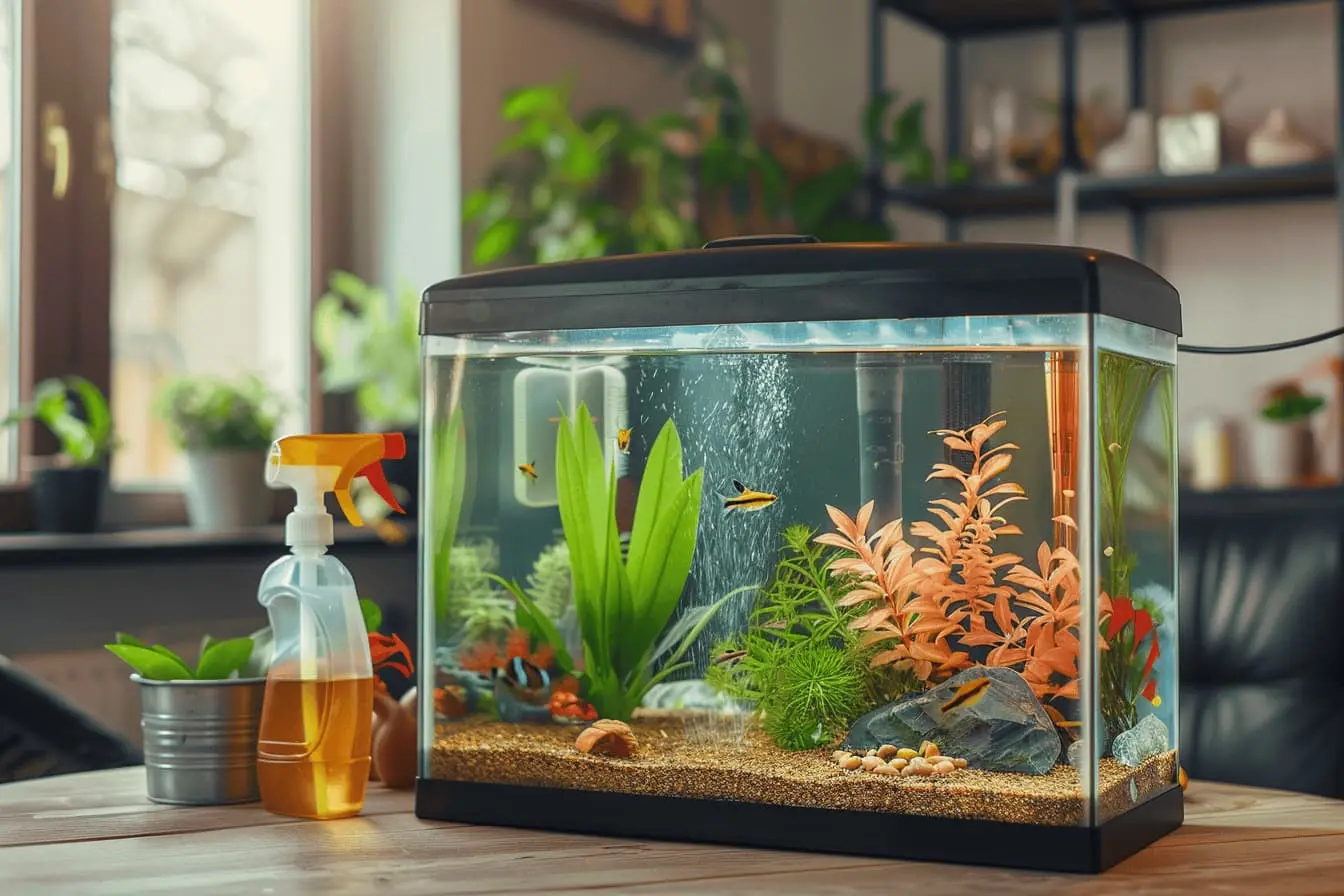
Maintaining a healthy and thriving aquarium requires consistent care and attention. Regular maintenance and water quality checks are crucial for the well-being of your aquatic species and plants.
In this blog post, we'll breakdown the essential tasks every new aquarium owner should incorporate into their routine to ensure their tank remains a vibrant and healthy environment.
Regular Maintenance: The Key to a Thriving Aquarium
Weekly Tasks
Partial Water Changes — Every week, aim to replace about 20-25% of the water in your tank. This helps remove toxins and replenish essential minerals. Use a gravel vacuum to simultaneously remove water and clean the substrate, removing uneaten food, waste, and other debris.
Filter Maintenance — Check your filter weekly to ensure it's running smoothly. Rinse the filter media in the water you've removed from the tank (never tap water, as it can kill beneficial bacteria) to remove excess debris without destroying the bacteria colony.
Check Equipment — Ensure all equipment (such as heaters, lights, and pumps) are functioning correctly. This prevents unexpected failures that could affect the tank's environment.
Monthly Tasks
Deep Cleaning — In addition to your weekly vacuuming, a more thorough cleaning of the substrate should be done monthly. This might include rearranging decorations and plants to clean thoroughly around and under them. If your tank contains artificial plants and ornaments you might need to give these a scrub to remove algae and debris build up. An aquarium magnet can be used to clean the tank glass.
Trim Plants — If you have live plants, trim any dead or overgrown foliage to keep your tank looking tidy and ensure that there is adequate light and space for all inhabitants.
Test the Water Quality — It's crucial to check the pH, ammonia, nitrite, and nitrate levels to ensure they're within safe ranges. Imbalances can be harmful or even fatal to your aquatic life. Dip test kits can be readily purchased from aquatic stores or online.
Water Quality Checks: The Lifeline of Your Aquarium
Understanding Key Parameters
pH Level — The ideal pH level varies depending on the species you have but generally should be between 6.5 and 7.5 for a community tank.
Ammonia and Nitrite — These should always be at 0 ppm (parts per million). Any presence of ammonia or nitrite can indicate a problem with the nitrogen cycle, usually due to overfeeding, overstocking, or insufficient filtration.
Nitrate — While less toxic than ammonia and nitrite, high nitrate levels can stress fish and promote algae growth. Aim to keep nitrate below 20 ppm.
Concluding Thoughts
Regular maintenance and diligent water quality checks are the backbone of a healthy aquarium. By integrating these practices into your routine, you'll not only ensure the well-being of your aquatic inhabitants but also prevent potential problems before they escalate. Remember, a successful aquarium isn't just about the beauty it brings to your space; it's about creating a sustainable, thriving ecosystem that mimics the natural habitats of your fish and plants. Happy fishkeeping!
Quick questions
- What should I know about aquarium maintenance?
- Maintaining a successful aquarium involves regular care and monitoring of water quality to ensure the health of aquatic life and plants. Essential tasks for new aquarium owners include weekly water changes of 20-25%, filter. Vet Verified can help you compare UK veterinary practices by location, species, services and opening hours before you call.
- When should I contact a vet about aquarium maintenance?
- Contact a veterinary practice if your pet seems unwell, symptoms are getting worse, you are unsure what to do, or the situation may be urgent. Vet Verified helps you compare practice details, but a vet should advise on your pet's current care.
- Can Vet Verified help me find a vet?
- Yes. Use Vet Verified to compare UK veterinary practices by location, species, services and opening hours, then call directly to confirm current availability.
Find a vet
Need a vet for this?
Use Vet Verified to compare UK veterinary practices that match this topic, then call the practice directly to confirm current services and availability.
Find a vet