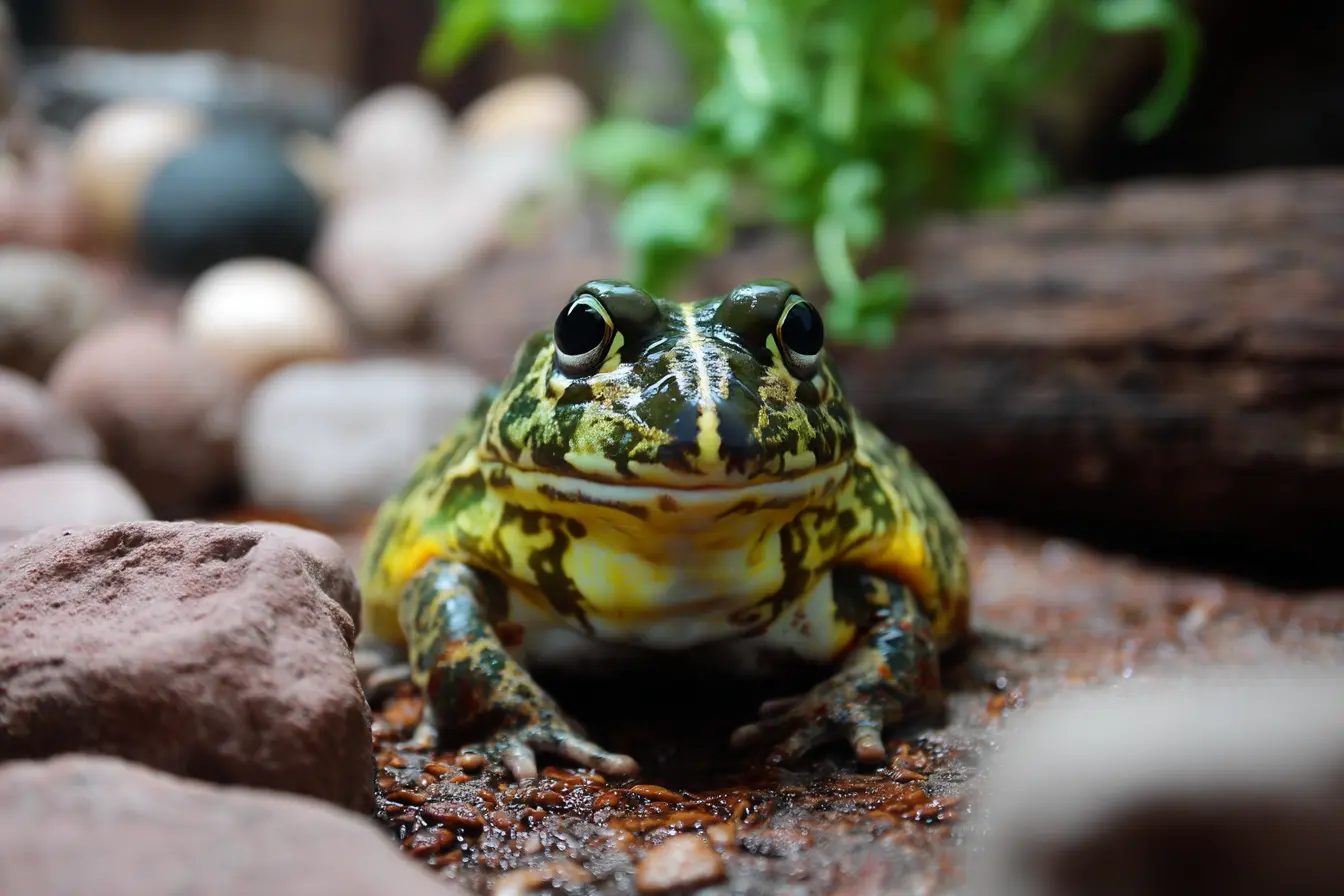
The African dwarf bullfrog (Pyxicephalus edulis) is a robust and fascinating amphibian native to sub-Saharan Africa. Often overshadowed by its larger relative, the African bullfrog (Pyxicephalus adspersus), this smaller species shares many of the same traits, including a powerful build, voracious appetite, and engaging personality, but in a more manageable size.
For reptile and amphibian enthusiasts, the African dwarf bullfrog offers an appealing combination of hardy temperament and entertaining behaviour. This guide provides a detailed overview of everything you need to know about keeping this impressive frog, from enclosure setup and diet to breeding and long-term care.
Physical Characteristics
Size
- Adult males typically reach 8–10 cm (3–4 inches) in length.
- Females are slightly larger, growing up to 11–12 cm (4.5 inches).
- Despite being called “dwarf”, they are still chunky, heavy-bodied frogs.
Lifespan
- With proper care, African dwarf bullfrogs can live 10–15 years in captivity.
Colouration and Skin Texture
- Colouration varies from olive green to brown, often with lighter patches or mottled markings.
- The underside is pale cream or yellowish.
- Skin is thick and slightly rough, helping them retain moisture during dry periods.
- Males develop a subtle yellowish throat, especially during the breeding season.
Sexual Dimorphism
- Females are larger and rounder, while males are smaller but more vocal.
- Males may develop darker throats and slightly more pronounced forearm muscles during breeding.
Natural Range and Habitat
The African dwarf bullfrog inhabits grasslands, savannahs, and open woodland areas across central and southern Africa. It is a burrowing species, spending much of its life underground during dry spells and emerging during the rainy season to feed and breed.
This behaviour allows it to survive extreme temperatures and unpredictable weather conditions, making it well-suited to captive environments when properly maintained.
Legal and Ethical Considerations
In the UK, African dwarf bullfrogs are legal to own and not subject to CITES restrictions. However, as with any exotic species, they should only be purchased from reputable, captive-bred sources. Wild-caught specimens can carry parasites, suffer from stress, and have poor survival rates in captivity.
Responsible ownership also means never releasing unwanted animals into the wild, as this can harm local ecosystems.
Housing and Enclosure Setup
The African dwarf bullfrog is a terrestrial species with limited climbing ability. It spends much of its time partially buried in the substrate, waiting to ambush prey. Its enclosure should replicate the humid, earthy conditions of its natural environment.
Enclosure Size
- A single adult can be comfortably housed in a 60 × 45 × 30 cm (24 × 18 × 12 inch) terrarium.
- For two frogs, a larger setup (at least 90 cm long) is recommended.
- These frogs are solitary and can be aggressive, so housing them separately is best outside of breeding attempts.
Substrate
- Use a deep layer (8–10 cm) of moist coconut fibre, topsoil, or a mix of soil and sphagnum moss.
- The substrate should be kept damp but not waterlogged.
- Avoid gravel or bark chips, which can cause impaction if swallowed.
Hides and Decor
- Provide natural hides such as cork bark, logs, or leaf litter.
- A shallow water dish large enough for the frog to soak in is essential; use dechlorinated water.
- Include artificial or live plants for added humidity and aesthetics, though the frog may rearrange them.
Temperature and Humidity
- Maintain a daytime temperature of 25–28°C (77–82°F) with a slight drop at night.
- Use a low-wattage heat mat on one side of the enclosure to create a gentle temperature gradient.
- Humidity should stay between 60–80%. Mist daily to maintain moisture levels.
Lighting
- No special UVB lighting is required, but providing a 12-hour light cycle helps regulate natural behaviour.
- If live plants are used, low-intensity plant lighting can be beneficial.
Diet and Feeding
African dwarf bullfrogs are enthusiastic carnivores with a strong feeding response. They are ambush predators, waiting motionless for prey to pass within range before striking.
Suitable Food Items
- Crickets and locusts (gut-loaded)
- Earthworms and nightcrawlers
- Dubia or hissing roaches
- Mealworms and waxworms (occasional treats only)
- Frozen-thawed pinky mice (for fully grown adults, offered sparingly)
- Black soldier fly larvae
Feeding Schedule
- Juveniles: Feed daily on smaller insects.
- Adults: Feed every 2–3 days.
- Avoid overfeeding; obesity is a common issue in captivity.
Supplementation
- Dust food with a calcium supplement twice weekly.
- Use a multivitamin powder once every two weeks.
- Ensure all live prey is gut-loaded for nutritional value.
Behaviour and Handling
General Behaviour
- Mostly nocturnal and sedentary, spending much of the day buried with only the eyes visible.
- During feeding, they show powerful lunges and may attempt to bite moving objects.
- They are solitary and territorial, especially males.
- In dry conditions, they can encase themselves in a protective cocoon and enter a dormant state (aestivation).
Handling
- Avoid unnecessary handling, as their skin absorbs oils and chemicals easily.
- If you must move your frog, use wet, clean hands or powder-free gloves.
- These frogs can give a surprisingly strong bite due to their jaw strength.
Health and Common Problems
Common Health Issues
- Obesity from excessive feeding or fatty prey.
- Impaction from ingesting loose substrate.
- Skin infections due to poor hygiene or overly damp substrate.
- Dehydration if humidity is too low.
- Respiratory problems from incorrect temperature or ventilation.
Preventative Care
- Keep the enclosure clean and remove waste regularly.
- Provide proper temperature and humidity gradients.
- Offer appropriately sized prey and avoid overfeeding.
- Perform routine health checks to monitor skin condition and weight.
Breeding the African Dwarf Bullfrog
Breeding is possible in captivity but can be challenging without seasonal cues.
Breeding Triggers
- Mimic the rainy season by lowering the temperature and humidity for 4–6 weeks, followed by heavy misting and an increase in humidity.
- Males will begin to call with deep, rumbling croaks to attract females.
Reproduction
- Amplexus occurs in shallow water, where females lay up to 1,000 eggs.
- Eggs hatch in 2–3 days, producing aquatic tadpoles that feed on algae and small invertebrates.
- Metamorphosis into froglets occurs within 3–5 weeks.
Tadpole Care
- Provide clean, oxygenated water and a varied diet of crushed flake food or specialised tadpole food.
- Once metamorphosis is complete, move the young frogs to a terrestrial setup with damp substrate.
Conservation Notes
While not endangered, African dwarf bullfrogs are impacted locally by habitat loss and pollution. Captive breeding reduces pressure on wild populations and helps maintain sustainable stock for the pet trade.
As a hardy species, they make excellent educational ambassadors for African amphibians when kept responsibly.
Conclusion
The African dwarf bullfrog is a tough yet captivating amphibian that thrives in a well-maintained terrarium. Its manageable size, engaging personality, and durability make it an excellent choice for experienced keepers or those seeking a low-maintenance frog with character.
By maintaining warm, humid conditions, offering a varied diet, and respecting its burrowing instincts, you can enjoy the company of this fascinating species for many years. The African dwarf bullfrog is a perfect reminder that even the “smaller” species of Africa’s amphibian world can be every bit as impressive as their larger cousins.
Quick questions
- What should I know about african dwarf bullfrog?
- The African dwarf bullfrog, native to sub-Saharan Africa, is a robust amphibian ideal for reptile enthusiasts. They are known for their hardy nature and entertaining behaviour. Adult males are 8–10 cm long, while females are. Vet Verified can help you compare UK veterinary practices by location, species, services and opening hours before you call.
- When should I contact a vet about african dwarf bullfrog?
- Contact a veterinary practice if your pet seems unwell, symptoms are getting worse, you are unsure what to do, or the situation may be urgent. Vet Verified helps you compare practice details, but a vet should advise on your pet's current care.
- Can Vet Verified help me find exotic vets?
- Yes. Use Vet Verified to compare exotic vets across the UK, then check practice profiles and call directly to confirm current availability.
Find a vet
Need a vet for this?
Use Vet Verified to compare UK veterinary practices that match this topic, then call the practice directly to confirm current services and availability.