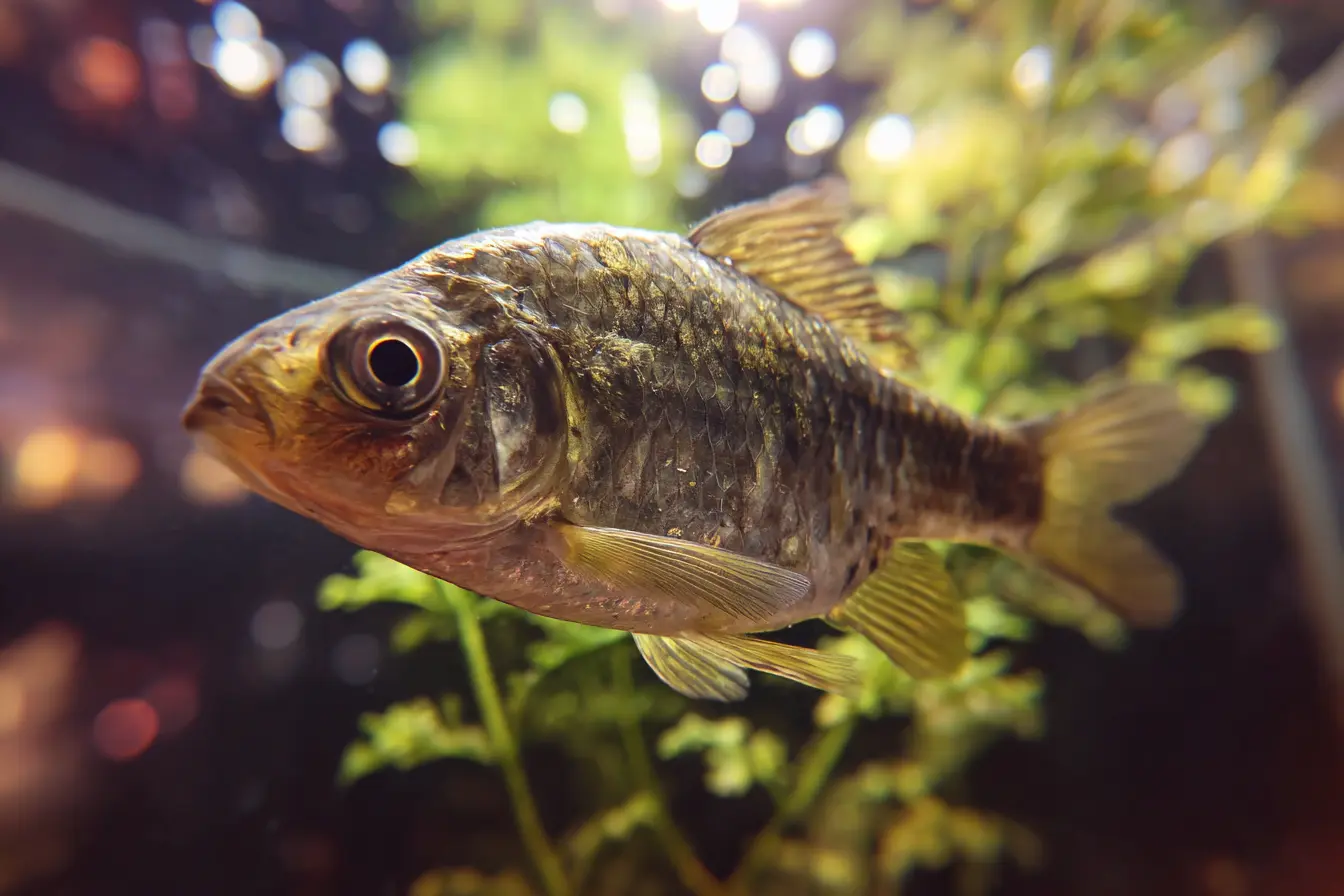
Bitterling are not only beautiful additions to a garden pond but also have one of the most fascinating breeding behaviours in the fish world. Unlike most fish, bitterling rely on a special relationship with freshwater mussels to reproduce. This unique strategy makes breeding bitterling both rewarding and a bit more complex than with other pond fish. Here’s everything you need to know about breeding bitterling in your pond.
Understanding Bitterling Breeding Behaviour
The European bitterling (Rhodeus amarus) has a unique spawning method that involves freshwater mussels:
- Males: In spring and early summer, males develop striking breeding colours, with a rosy-pink flush on their bellies and shimmering blue stripes along their flanks. They become territorial and display to attract females.
- Females: Females develop a long ovipositor – a tube-like structure used to lay eggs inside the gill chambers of live freshwater mussels.
- Mussel role: Mussels provide a safe, oxygenated nursery for the eggs and protect the fry until they’re ready to swim free.
This unusual mutual relationship means that successful bitterling breeding depends on the presence of healthy, living mussels in your pond.
Preparing the Pond for Breeding
Mussel Requirements
For bitterling breeding to be successful, your pond needs a population of native freshwater mussels, such as:
- Swan mussel (Anodonta cygnea) – the most commonly used by bitterling.
- Duck mussel (Anodonta anatina) – also suitable for breeding.
Healthy mussels provide the perfect environment for bitterling eggs to develop. Mussels also play a role in cleaning your pond water and supporting a balanced ecosystem.
Mussel Care
To keep mussels healthy:
- Water quality: Mussels need clean, well-oxygenated water. Stable pH (7.0–8.0) and low levels of ammonia and nitrite are essential.
- Substrate: A soft, sandy or fine gravel pond bottom helps mussels anchor themselves.
- Avoid disturbance: Avoid disturbing mussels when working in the pond.
General Pond Setup
- Planting: Provide plenty of submerged and marginal plants for cover and natural spawning behaviour.
- Filtration and aeration: Good water flow and oxygenation are vital for both mussels and fish.
- Water depth: At least 60 cm (24 inches) to provide a stable environment for fish and mussels.
The Breeding Process
- Courtship: Males stake out territories near mussels and display to attract females.
- Spawning: The female uses her ovipositor to insert eggs directly into the mussel’s gill chambers.
- Fertilisation: Males release sperm into the water, which enters the mussel and fertilises the eggs.
- Development: The mussel protects the eggs and provides a constant flow of oxygenated water. Eggs typically hatch in 2–3 weeks.
Supporting Fry Development
After hatching, the tiny fry remain inside the mussel’s gills for several days before swimming free. Once they emerge:
- Natural feeding: Fry feed on plankton, small insects, and microscopic pond life.
- Supplemental feeding: If your pond is less naturalistic, offer finely crushed flake food or fry-specific foods to ensure good early growth.
Seasonal Timeline
- Spring (April–June): This is the peak breeding season. Watch for bright colours in males and the distinctive ovipositor in females.
- Summer: Fry develop and begin to explore the pond environment. Ensure good water quality and plenty of tiny natural food sources.
- Autumn: Reduce feeding and maintain good water conditions as temperatures drop.
- Winter: Bitterling rest in deeper water. Stop feeding once temperatures remain below 10°C and avoid disturbing them.
Common Challenges and Tips
Mussel Health
Healthy mussels are essential for breeding. If your pond doesn’t already have mussels:
- Purchase mussels from reputable aquatic suppliers.
- Avoid introducing invasive mussel species, as these can disrupt native ecosystems.
Water Quality
Stable, clean water is vital for both mussels and fry survival:
- Test weekly in summer: Check pH, ammonia, nitrite, and nitrate.
- Partial water changes: Change 10–20% of the water as needed to maintain water quality.
Predators
Young fry are vulnerable to predation:
- Provide plenty of plant cover and hideaways.
- Avoid introducing large, aggressive fish that may eat fry.
The Benefits of Breeding Bitterling
Breeding bitterling offers more than just the satisfaction of seeing new life in your pond:
- Supports biodiversity: Mussels benefit from the bitterling’s lifecycle, helping them spread their larvae.
- Natural balance: Bitterling add to the complexity of a natural pond ecosystem.
- Unique experience: Watching this unusual breeding partnership is a fascinating window into pond life.
Conclusion
Breeding bitterling is a rewarding challenge for the pond keeper who wants to create a natural, balanced ecosystem. With healthy mussels, good water quality, and plenty of plant cover, you can support the unique life cycle of these captivating little fish and enjoy the beauty and wonder of a truly living pond.
Quick questions
- What should I know about bitterling breeding?
- Breeding bitterling fish in a garden pond provides a unique and rewarding experience. These fish rely on a special partnership with freshwater mussels for reproduction. Male bitterling display bright colours during breeding,. Vet Verified can help you compare UK veterinary practices by location, species, services and opening hours before you call.
- When should I contact a vet about bitterling breeding?
- Contact a veterinary practice if your pet seems unwell, symptoms are getting worse, you are unsure what to do, or the situation may be urgent. Vet Verified helps you compare practice details, but a vet should advise on your pet's current care.
- Can Vet Verified help me find a vet?
- Yes. Use Vet Verified to compare UK veterinary practices by location, species, services and opening hours, then call directly to confirm current availability.
Find a vet
Need a vet for this?
Use Vet Verified to compare UK veterinary practices that match this topic, then call the practice directly to confirm current services and availability.
Find a vet