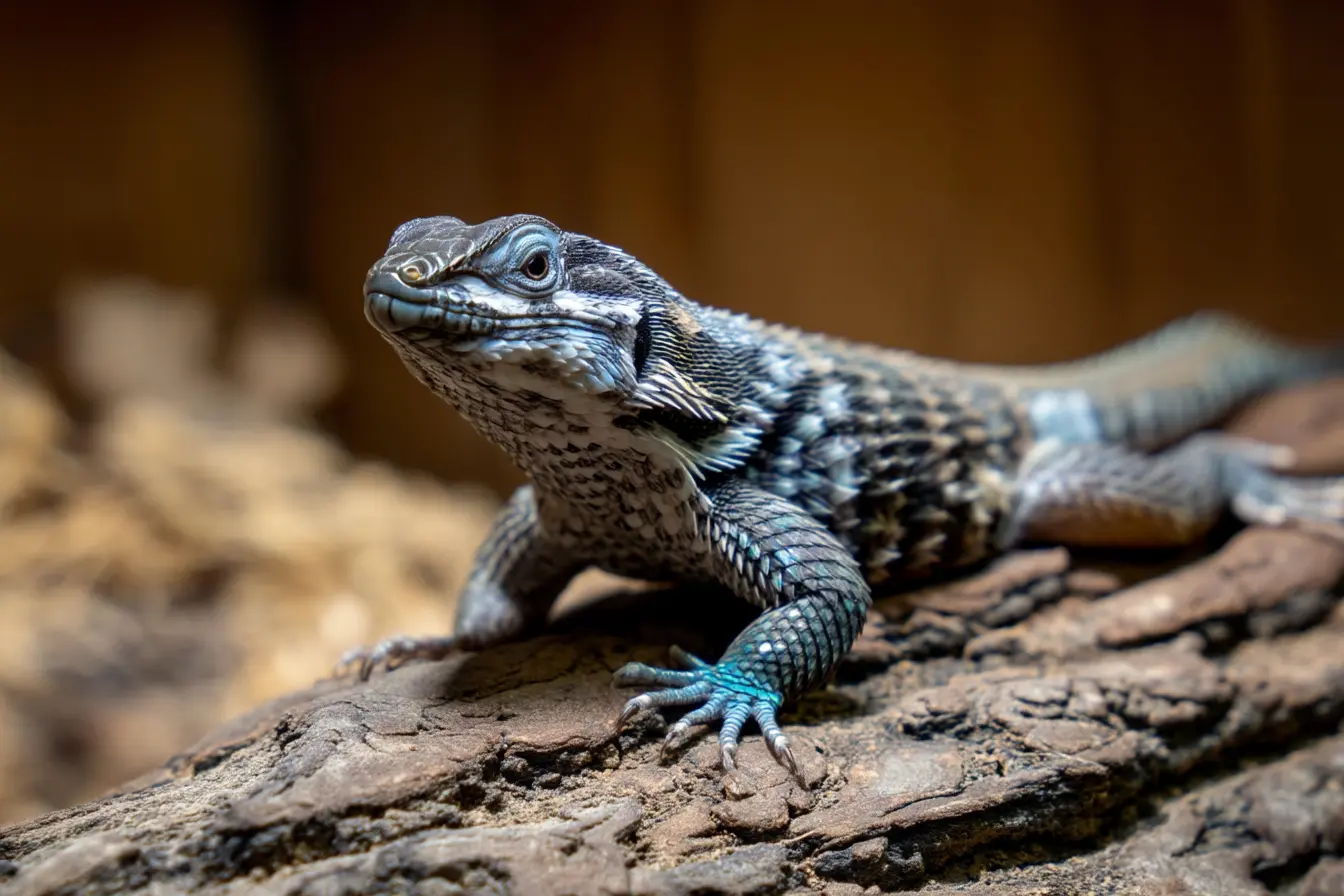
The Blue Spiny Swift Lizard is a striking, high-energy reptile prized for its vivid blue markings, spiny texture, and lightning-fast movements. With an athletic build and an alert, intelligent gaze, this lizard brings a sense of raw wilderness into the vivarium. Native to arid and semi-arid regions, it is superbly adapted to a life of sun, stone, and speed.
Bold, active, and endlessly engaging, the Blue Spiny Swift Lizard is best suited to keepers who enjoy dynamic, display-focused reptiles. When provided with the right environment, it rewards its keeper with fascinating behaviour and a truly impressive presence.
Origins and Natural Habitat
The Blue Spiny Swift Lizard originates from rocky scrublands, open woodland, and desert margins, where intense sunlight and sparse vegetation dominate the landscape. These environments are characterised by hot days, cooler nights, and plenty of stone outcrops used for basking and shelter.
In the wild, this species is primarily terrestrial but makes excellent use of rocks, fallen logs, and low branches. It relies on speed and keen eyesight to evade predators and capture prey. Males are territorial and often display vivid blue colouration to assert dominance or attract females.
Appearance and Temperament
Physical Traits
- Size: Adults typically reach 18–25 cm in total length, including the tail
- Colouration: Grey, tan, or brown base tones accented by electric blue patches or stripes, particularly prominent in males
- Scales: Strongly keeled, spiny scales that give the species its rugged appearance
- Build: Muscular limbs and a streamlined body built for rapid bursts of speed
Behaviour and Temperament
Blue Spiny Swift Lizards are alert, fast-moving, and highly aware of their surroundings. They are not aggressive but are naturally wary and rely on speed rather than confrontation.
In captivity, they are best described as observant and reactive. With time, they often become confident in their enclosure and will bask openly, especially when accustomed to regular routines. They are not handleable pets and should be kept primarily for observation.
Housing Requirements
This species thrives in a spacious, horizontally oriented enclosure that reflects its open, sun-drenched habitat.
Enclosure Size
- Single adult: Minimum 90 cm x 45 cm x 45 cm
- Pair or group (1 male, 2–3 females): 120 cm x 60 cm x 60 cm or larger
Floor space is more important than height. Front-opening vivariums are ideal, as they reduce stress during maintenance.
Heating and Temperature Gradient
- Basking spot: 38–42°C
- Warm side: 30–32°C
- Cool side: 24–26°C
- Night-time: Drop to 18–22°C
A strong basking lamp is essential, positioned over a flat rock or raised platform. These lizards depend on intense heat to fuel their high metabolism.
Lighting and UVB
High-output UVB lighting (10–12%) is critical. The Blue Spiny Swift Lizard is a true sun-worshipper and requires strong UVB to maintain bone health, muscle function, and colour intensity.
Provide bright, white daylight lighting alongside UVB to mimic natural desert sunlight. Maintain a 12–14 hour daylight cycle during summer, reducing slightly in winter.
Humidity and Water
This species prefers low to moderate humidity, around 30–40%. Excess moisture can lead to respiratory or skin issues.
Provide a shallow water dish, refreshed daily. Occasional light misting once or twice a week is sufficient, mainly to support hydration and shedding rather than to raise humidity.
Substrate and Furnishings
- Substrate: Sand-soil mix, arid bioactive substrate, or packed earth-style bedding
- Decor: Flat basking rocks, stacked stone hides, cork bark, and sturdy branches
- Hides: At least two hides, one on the warm side and one on the cool side
- Visual barriers: Rocks and decor arranged to break up sightlines and reduce stress
A naturalistic, rocky layout encourages confident basking and exploration.
Diet and Feeding
Blue Spiny Swift Lizards are insectivorous, with a strong feeding response and excellent hunting skills.
Feeding Schedule
- Juveniles: Daily
- Adults: Every other day
Food Items
- Crickets
- Locusts
- Dubia or red runner roaches
- Silkworms
- Occasional mealworms or waxworms as treats
All prey should be appropriately sized, gut-loaded, and dusted with supplements.
Supplementation
- Calcium without D3: At most feeds
- Calcium with D3: Once weekly
- Multivitamin: Once weekly
Offer food during the warmest part of the day when the lizard is most active.
Handling and Interaction
Handling is not recommended beyond necessity. These lizards are extremely fast and can injure themselves if startled.
If handling is unavoidable:
- Use slow, calm movements
- Guide rather than grab where possible
- Keep sessions brief and close to the ground
Most individuals become tolerant of a keeper’s presence and will bask or feed confidently when left undisturbed.
Common Health Concerns
Metabolic Bone Disease (MBD)
Caused by insufficient UVB or calcium. Prevented through strong lighting and proper supplementation.
Dehydration
Despite their arid origins, access to fresh water is essential. Monitor skin condition and activity levels.
Tail Loss
Like many fast-moving lizards, they can drop their tails if severely stressed. Minimise handling and sudden disturbances.
Parasites
Wild-caught individuals may carry internal parasites. A reptile vet check is strongly recommended for new arrivals.
Lifespan and Breeding
With good care, Blue Spiny Swift Lizards can live 6–10 years in captivity.
Breeding is achievable for experienced keepers. Males display intensified blue colouration and perform push-ups to court females. Females lay clutches of 2–6 eggs in warm, sandy substrate. Incubation at 28–30°C lasts approximately 7–9 weeks.
Observation and Enrichment
This species truly shines when given opportunities to behave naturally.
Enrichment ideas include:
- Rearranging rocks periodically
- Varying feeding methods or prey types
- Providing seasonal light and temperature changes
Their speed, basking rituals, and territorial displays make them endlessly fascinating.
Conclusion
The Blue Spiny Swift Lizard is a powerhouse of energy and colour, perfectly embodying the spirit of sun-baked landscapes. With its electric blue highlights, rugged scales, and athletic movement, it is a standout species for the dedicated reptile keeper.
While not a hands-on pet, it excels as a display animal and thrives in a well-designed, arid vivarium. For keepers who appreciate active, visually striking reptiles with strong personalities, the Blue Spiny Swift Lizard is a thrilling and rewarding choice.
Quick questions
- What should I know about blue spiny swift lizard?
- The Blue Spiny Swift Lizard is a high-energy reptile known for its vivid blue markings and spiny texture. It thrives in spacious enclosures that mimic its natural arid habitat, with plenty of basking spots and strong UVB. Vet Verified can help you compare UK veterinary practices by location, species, services and opening hours before you call.
- When should I contact a vet about blue spiny swift lizard?
- Contact a veterinary practice if your pet seems unwell, symptoms are getting worse, you are unsure what to do, or the situation may be urgent. Vet Verified helps you compare practice details, but a vet should advise on your pet's current care.
- Can Vet Verified help me find exotic vets?
- Yes. Use Vet Verified to compare exotic vets across the UK, then check practice profiles and call directly to confirm current availability.
Find a vet
Need a vet for this?
Use Vet Verified to compare UK veterinary practices that match this topic, then call the practice directly to confirm current services and availability.