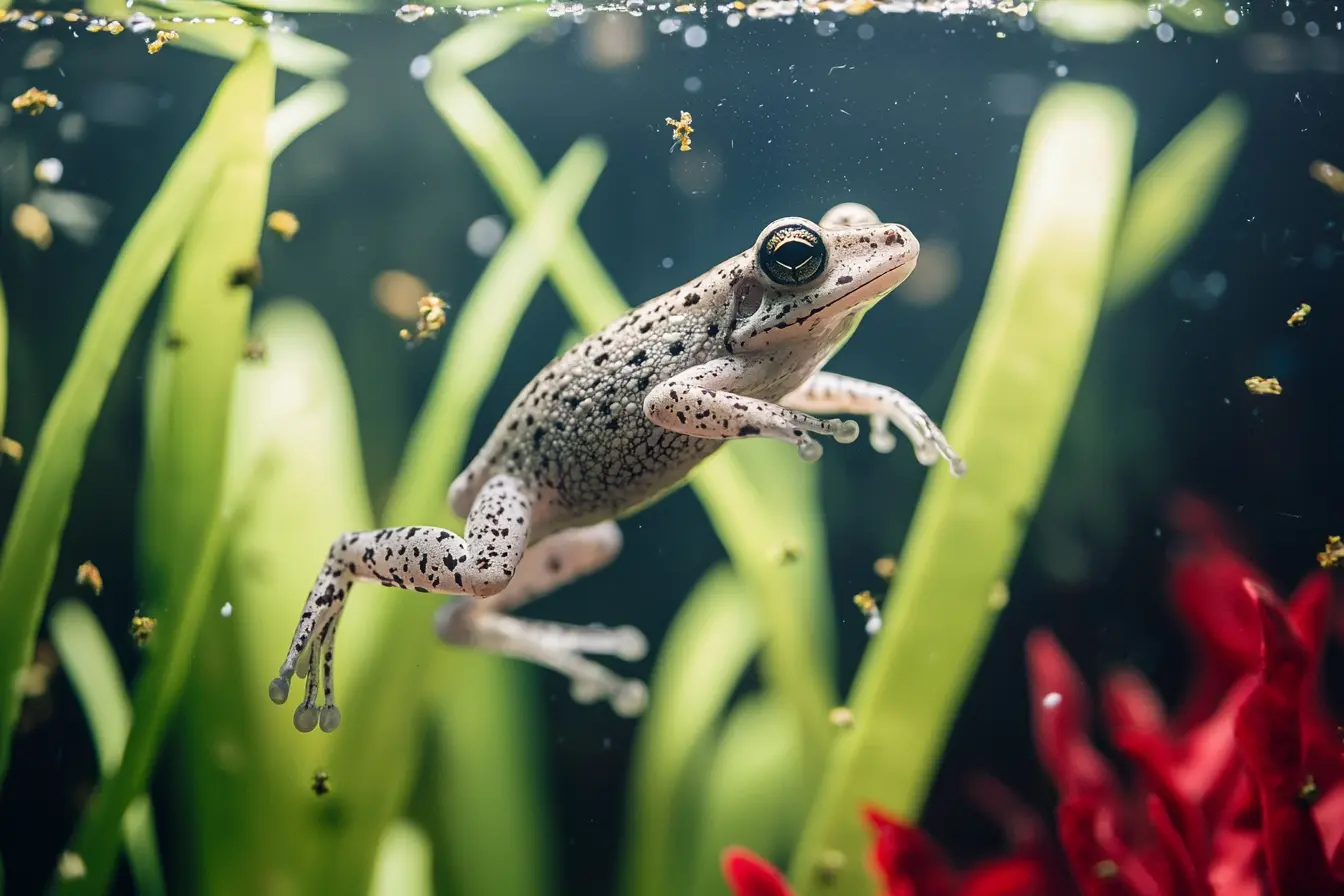
African Dwarf Frogs (Hymenochirus spp.) are fascinating, small, aquatic creatures that make a delightful addition to any aquarium. If you're considering getting one of these intriguing frogs as a pet, this guide will provide everything you need to know about their care, habitat, diet, and general wellbeing. Whether you are a seasoned aquarium enthusiast or a first-time pet owner, you will find this guide helpful for understanding how to properly care for African Dwarf Frogs.
What Are African Dwarf Frogs?
African Dwarf Frogs are small, fully aquatic frogs native to central and west Africa. These frogs are often found in slow-moving rivers, ponds, and marshes, where they spend most of their time swimming in the water and hunting for food. With their unique appearance and playful behaviour, they make excellent pets for those with the right setup and understanding of their needs.
Key Characteristics
- Size: Typically 5-6 cm (2-2.5 inches) long when fully grown.
- Lifespan: Around 5 years, though some have been known to live longer with proper care.
- Colouration: They generally have a light brown or olive-green body with darker patterns, which help them blend into their natural habitat.
- Behaviour: African Dwarf Frogs are peaceful creatures, often seen swimming actively and occasionally basking near the surface of the water for air.
Setting Up the Right Habitat
Before bringing home an African Dwarf Frog, it's crucial to set up a suitable environment that mimics their natural habitat. This ensures their health and happiness.
1. Choosing the Right Aquarium
- Size: A minimum of a 20-litre tank is recommended for one frog, but larger tanks are always better. If you're planning on having more than one frog, you should add an additional 10 litres for each extra frog.
- Type of Tank: A closed aquarium is ideal to maintain stable conditions. A lid is necessary to prevent the frogs from escaping.
- Water Depth: African Dwarf Frogs are fully aquatic and require water that is at least 30 cm (12 inches) deep, allowing them to swim and dive freely.
2. Water Conditions
- Temperature: Maintain the water temperature between 24°C and 28°C (75°F - 82°F), which is the range that African Dwarf Frogs thrive in. A heater will likely be necessary in cooler environments.
- pH: The ideal pH level should be slightly acidic to neutral, around 6.5 to 7.5.
- Water Hardness: Soft to slightly hard water is best for these frogs.
- Water Filtration: A filtration system is essential to keep the water clean, but be sure it’s not too powerful, as African Dwarf Frogs are small and can be swept away by strong currents.
3. Aquarium Decor
- Substrate: Fine gravel or sand is suitable for the bottom of the tank. Avoid sharp objects that could injure your frog’s delicate skin.
- Plants and Hiding Spots: Live plants are highly recommended, as they provide hiding places and oxygenation. Frog-safe plants like Anubias, Java Fern, and Hornwort are popular choices.
- Air Access: While African Dwarf Frogs are aquatic, they need to come up to the surface for air. Ensure there is enough space at the top of the water for them to breathe comfortably.
4. Tank Mates
African Dwarf Frogs are peaceful and can live with a variety of other non-aggressive species. However, it’s essential to avoid keeping them with large, aggressive fish that may view the frogs as prey. Good tank mates include:
- Small, peaceful fish like tetras and guppies.
- Other African Dwarf Frogs (keep in mind, they may compete for food).
- Snails and shrimp (but ensure they are not predatory).
Feeding Your African Dwarf Frog
African Dwarf Frogs are carnivorous, which means they require a protein-based diet. In the wild, they feed on small invertebrates, fish larvae, and detritus. In captivity, it’s important to provide them with a balanced diet.
1. Diet
- Frozen or Live Food: High-quality frozen or live food such as bloodworms, brine shrimp, daphnia, and blackworms are ideal. You can purchase these from pet shops or online.
- Pellets: Specially formulated aquatic frog pellets can be offered as a supplementary food source.
- Avoid Overfeeding: It's crucial not to overfeed your frogs, as this can lead to water quality issues. Offer food two to three times a week, making sure to remove any uneaten food within a few hours.
2. Feeding Techniques
African Dwarf Frogs have poor eyesight, so they primarily rely on their sense of smell to find food. Ensure that food is placed in an area where the frogs can easily find it. It’s a good idea to use a turkey baster or a feeding stick to place food in the water, so they can grab it easily.
Care and Maintenance
1. Water Quality and Regular Maintenance
Maintaining clean, healthy water is essential for the well-being of your African Dwarf Frog. Perform regular water changes to keep the tank conditions optimal.
- Water Changes: Change 25% of the water every week to maintain water quality and remove excess waste.
- Testing the Water: Regularly test the water parameters (pH, ammonia, nitrites, nitrates) to ensure the tank is in balance.
2. Health Checks
African Dwarf Frogs are generally hardy, but like any pet, they are susceptible to health issues if their environment is not properly maintained. Some signs of health problems include:
- Skin lesions or swelling: Can indicate poor water quality or fungal infections.
- Lethargy or loss of appetite: May suggest stress, disease, or an improper diet.
- Abnormal behaviour: If the frog is floating at the surface for long periods, it could be suffering from a respiratory issue or be overly stressed.
If you notice any of these signs, it's best to consult a vet experienced with aquatic animals.
African Dwarf Frog Lifespan and Breeding
1. Lifespan
With proper care, African Dwarf Frogs can live up to 5 years. Regular maintenance of their tank, a balanced diet, and stable water conditions are key to ensuring a long, healthy life.
2. Breeding
Breeding African Dwarf Frogs in captivity can be challenging. Frogs typically breed during the rainy season in the wild, so you'll need to replicate certain conditions like temperature fluctuations and changes in water levels. Male frogs will often croak and perform a "mating dance" to attract females. However, it is not recommended for beginners to attempt breeding, as the tadpoles require specific care and conditions to survive.
Common Issues to Watch Out For
- Escape: African Dwarf Frogs are known to climb and may attempt to escape from their tanks. Ensure the tank has a secure lid.
- Tank Cleaning: Over-cleaning or using harsh chemicals to clean the tank can harm your frog. Always rinse decorations, substrate, and equipment with water before placing them back in the tank.
Conclusion
African Dwarf Frogs are low-maintenance and rewarding pets that can live happily in a well-maintained aquarium. With the right care, they will thrive and become fascinating members of your aquatic setup. Ensure their environment is suitable, their diet is balanced, and that their tank mates are compatible, and you'll have a happy, healthy African Dwarf Frog that can live for many years.
Quick questions
- What should I know about african dwarf frog?
- African Dwarf Frogs are unique, aquatic pets suitable for both experienced aquarium enthusiasts and beginners. Originating from central and west Africa, these frogs thrive in slow-moving water environments. To care for them,. Vet Verified can help you compare UK veterinary practices by location, species, services and opening hours before you call.
- When should I contact a vet about african dwarf frog?
- Contact a veterinary practice if your pet seems unwell, symptoms are getting worse, you are unsure what to do, or the situation may be urgent. Vet Verified helps you compare practice details, but a vet should advise on your pet's current care.
- Can Vet Verified help me find exotic vets?
- Yes. Use Vet Verified to compare exotic vets across the UK, then check practice profiles and call directly to confirm current availability.
Find a vet
Need a vet for this?
Use Vet Verified to compare UK veterinary practices that match this topic, then call the practice directly to confirm current services and availability.