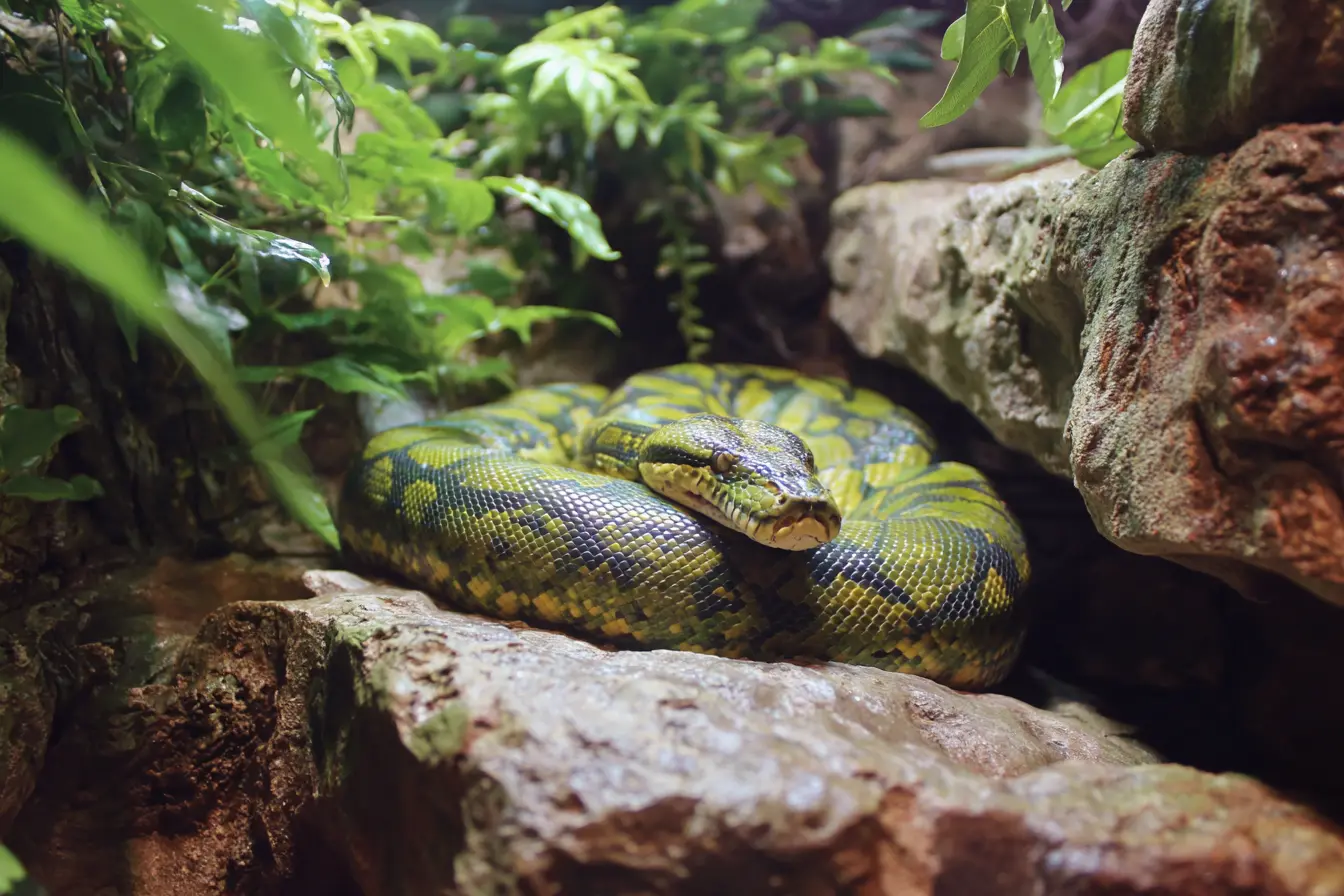
The Green anaconda (Eunectes murinus) is one of the most iconic and awe-inspiring snakes on Earth. Revered and feared in equal measure, this colossal constrictor holds the title of the world’s heaviest snake and is second only to the reticulated python in length. Native to the wetlands and river systems of South America, the Green anaconda embodies raw power, stealth, and adaptability.
While not a species suited to the average pet keeper, understanding the biology and husbandry of this incredible snake offers a fascinating glimpse into one of nature’s most remarkable predators. For experienced herpetologists and zoological collections, the Green anaconda can be a truly rewarding yet challenging species to care for.
Origins and Natural Habitat
The Green anaconda inhabits the tropical rainforests, flooded grasslands, and slow-moving waterways of the Amazon and Orinoco basins, with populations found in Brazil, Venezuela, Colombia, Peru, and Bolivia. These snakes are highly aquatic and spend most of their lives submerged in water, where their eyes and nostrils positioned on top of the head, allow them to remain almost completely hidden while watching for prey.
Their native environment is hot, humid, and densely vegetated. Water temperature and quality are crucial to their health, as they rely heavily on aquatic habitats for hunting, thermoregulation, and reproduction.
Appearance and Physical Characteristics
Size and Build
- Average adult size: 4–5 metres, though females can exceed 6 metres and weigh over 100 kilograms
- Males are significantly smaller and more slender than females
- The body is extremely muscular, built for constriction and swimming rather than climbing
Colouration
The Green anaconda’s body is olive-green with dark oval or round blotches along the back and sides, helping it blend seamlessly into murky water and vegetation. The underside is lighter, often yellowish with black spots.
Their scales have a glossy sheen that enhances camouflage and aids in water resistance.
Behaviour and Temperament
Green anacondas are solitary and ambush-oriented predators. They remain motionless for hours, waiting for unsuspecting prey to pass within striking distance. Despite their intimidating size, they are not inherently aggressive but can be defensive when threatened or stressed.
In captivity, they can become accustomed to routine care and handling, but due to their sheer strength and potential unpredictability, they should only be handled by experienced professionals, preferably with assistance.
Housing Requirements
Keeping a Green anaconda in captivity demands a large, highly secure, and environmentally controlled enclosure. These snakes require space to move, swim, and soak, as well as conditions that mimic their natural habitat.
Enclosure Size
- Juveniles: 180 cm x 90 cm x 90 cm
- Adults: Minimum 4–5 metres in length, with a large water section occupying at least half of the enclosure
Custom-built enclosures are often necessary for adults, as few commercial terrariums meet their needs. The enclosure must be escape-proof and capable of maintaining high humidity without causing mould or condensation buildup.
Heating and Temperature Gradient
- Ambient temperature: 28–30°C
- Basking area: 32–33°C
- Water temperature: 27–29°C
- Night-time: Should not fall below 25°C
Use radiant heat panels or ceramic heaters controlled by thermostats. Heating should be even and consistent to prevent respiratory issues.
Lighting and UVB
Although primarily aquatic and nocturnal, low-level UVB (2–5%) is beneficial for general health and calcium metabolism. A regular 12-hour light cycle helps maintain natural behaviour patterns.
Humidity and Water
Humidity should remain between 70–90%. A large, clean water pool deep enough for the snake to fully submerge is essential. This pool should be filtered and cleaned regularly to prevent bacterial build-up, as anacondas spend much of their time in water.
The enclosure should also include a dry basking area and land section with branches, logs, and dense cover for security.
Substrate and Furnishings
- Substrate: Cypress mulch, coconut fibre, or a soil and sphagnum moss mix for moisture retention
- Decor: Large branches, sturdy hides, and artificial plants for cover
- Water: A drain or pump system is strongly recommended for ease of cleaning
The overall environment should feel natural, secure, and spacious to reduce stress.
Diet and Feeding
Green anacondas are powerful constrictors that feed on a wide variety of prey in the wild, including fish, birds, mammals, and occasionally caimans or capybaras. In captivity, their diet should be managed carefully to avoid obesity and digestive issues.
Feeding Schedule
- Juveniles: Every 7–10 days
- Adults: Every 3–4 weeks
Food Items
Feed appropriately sized prey, such as rats, rabbits, guinea pigs, or large fish. Prey size should be roughly equivalent to the snake’s girth. Always offer frozen-thawed food that has been fully thawed and warmed.
Large meals should be followed by a longer resting period to allow complete digestion. Overfeeding can cause regurgitation or health problems, particularly in adults.
Feeding Tips
Feed in the evening when the snake is more active. Use feeding tongs to present prey safely. After feeding, avoid handling for 72 hours to prevent regurgitation.
Handling and Safety
Handling a Green anaconda requires caution, confidence, and respect. These snakes are immensely strong and can easily overpower a person if restrained incorrectly.
- Never handle an adult alone; always have at least one additional person present
- Support the snake’s full body weight, avoiding sudden movements
- Minimise handling to reduce stress
- Always approach from the side rather than from above
When cared for properly and handled with experience, many individuals can become calm and cooperative over time, though they remain best suited to observation rather than frequent interaction.
Common Health Concerns
Respiratory Infections
Often caused by cool or stagnant air. Symptoms include wheezing, bubbling at the nostrils, or open-mouth breathing.
Scale Rot
Results from dirty or overly damp conditions. Maintain good hygiene and ensure the snake has dry areas available.
Shedding Issues
Low humidity can lead to incomplete sheds. Increase misting or add a humid hide during shedding cycles.
Parasites
Both external and internal parasites are possible, particularly in wild-caught specimens. Regular veterinary checks and quarantine are vital.
Proper environmental control and consistent enclosure maintenance are the best defences against most health issues.
Lifespan and Breeding
Green anacondas can live for 25–30 years in captivity with proper care. Breeding usually occurs at the start of the rainy season, when males track females using pheromones. Females are ovoviviparous, giving birth to live young, often between 20 and 40, though litters exceeding 80 have been recorded.
Newborns are around 60–70 cm long and independent from birth, feeding readily on small rodents or fish.
Conclusion
The Green anaconda stands as one of the most extraordinary and formidable creatures in the natural world. Its immense size, aquatic grace, and ancient lineage make it a true marvel of evolution.
However, its care demands exceptional dedication, space, and experience. This is not a species for casual keepers but a challenge reserved for those with the facilities and expertise to meet its needs.
For those capable of providing the right environment, the Green anaconda offers a unique window into the majesty of the Amazon, an apex predator whose quiet power and breathtaking beauty continue to captivate all who encounter it.
Quick questions
- What should I know about green anaconda?
- The Green anaconda is the world's heaviest snake, known for its impressive size and aquatic lifestyle in South America's rainforests. It is not a typical pet and requires a controlled environment with space to swim and move. Its. Vet Verified can help you compare UK veterinary practices by location, species, services and opening hours before you call.
- When should I contact a vet about green anaconda?
- Contact a veterinary practice if your pet seems unwell, symptoms are getting worse, you are unsure what to do, or the situation may be urgent. Vet Verified helps you compare practice details, but a vet should advise on your pet's current care.
- Can Vet Verified help me find exotic vets?
- Yes. Use Vet Verified to compare exotic vets across the UK, then check practice profiles and call directly to confirm current availability.
Find a vet
Need a vet for this?
Use Vet Verified to compare UK veterinary practices that match this topic, then call the practice directly to confirm current services and availability.
Search by species
- Exotic vets Find UK veterinary practices that list exotic pet care. Compare practice profiles, opening hours, contact details and verification signals.
- Bird vets Find UK veterinary practices that list care for birds. Compare practice profiles, contact details, opening hours and verification signals.