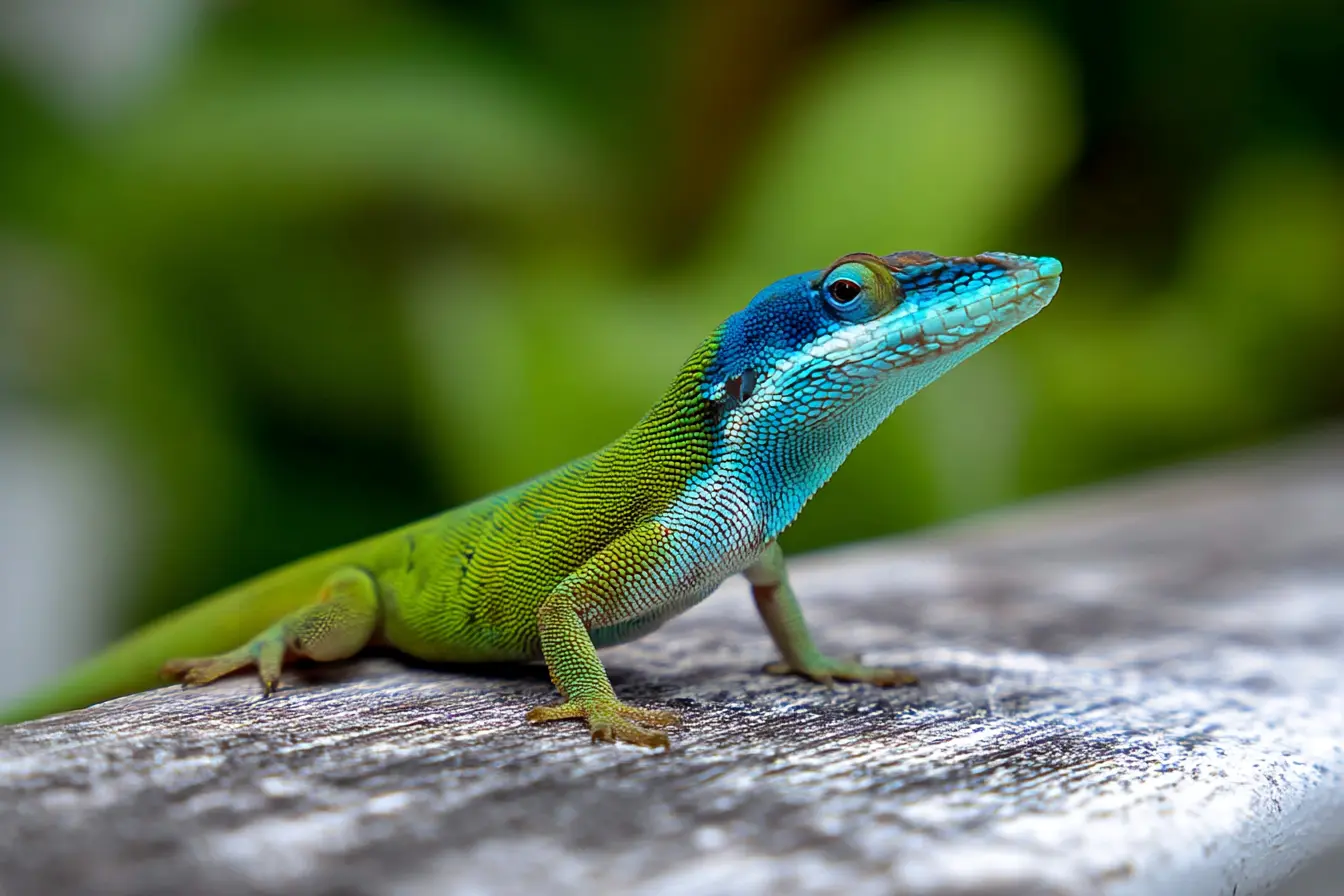
Blue-Headed Anole: The Sapphire Jewel of the Caribbean
The blue-headed anole (Anolis allisoni) is one of the most dazzling members of the anole family. With its vivid turquoise-blue head and emerald-green body, this stunning lizard is a living gem of the Caribbean islands. Native to Cuba, the Bay Islands of Honduras, and parts of Belize, the blue-headed anole thrives in tropical forests where sunlight filters through the canopy, highlighting its brilliant colours.
Lively, intelligent, and full of character, this species is a favourite among reptile enthusiasts who appreciate beauty and behaviour in equal measure. Though delicate and best suited to experienced keepers, the blue-headed anole offers endless fascination when kept in the right environment.
Origins and Natural Habitat
The blue-headed anole is native to coastal and forested regions of Cuba and surrounding islands, with introduced populations now established in parts of Belize and southern Florida. It prefers warm, humid habitats, particularly tropical woodlands and mangroves, where it can bask on tree trunks and branches.
This species is arboreal, spending most of its time above ground. Males are territorial, displaying their dewlaps (a colourful throat fan) and vivid blue heads to warn rivals or attract mates. These displays, along with their graceful movements, make them one of the most visually striking reptiles of the Caribbean.
Appearance and Temperament
Physical Traits
- Size: Adults reach 13–20 cm in total length, including the tail
- Colouration: Males exhibit a brilliant turquoise or sky-blue head, merging into a green or blue-green body; females are usually green or brownish with more subdued colouring
- Dewlap: Males have a bright pink or orange dewlap used in territorial and courtship displays
- Eyes: Large, expressive, and alert, suited for spotting movement among leaves and branches
Behaviour and Temperament
Blue-headed anoles are active, curious, and social within their arboreal domain. Males are territorial and will vigorously display or chase other males, while females are more peaceful and can often coexist if provided ample space.
In captivity, they are alert and aware of their surroundings. While not aggressive, they are fast and can become stressed if handled frequently. These lizards are best appreciated as vibrant display animals rather than hands-on pets.
Housing Requirements
Blue-headed anoles thrive in a vertically oriented, well-planted terrarium that mimics their tropical forest home.
Enclosure Size
- A single adult: Minimum 60 cm x 45 cm x 90 cm
- A pair or trio: 90 cm x 60 cm x 120 cm or larger
A tall enclosure is essential, as these anoles spend most of their time climbing. Mesh or hybrid glass-ventilated terrariums provide the airflow and humidity balance they need.
Heating and Temperature Gradient
- Basking spot: 32–34°C
- Ambient daytime temperature: 26–29°C
- Night-time: Drop to around 22–24°C
Provide heat with a low-wattage basking bulb or heat emitter. Position the basking area high in the enclosure on a branch or vine to encourage natural perching behaviour.
Lighting and UVB
Strong UVB lighting (5–7%) is vital for calcium metabolism, bone health, and overall wellbeing. Use a full-spectrum bulb that also provides bright visible light, these lizards are highly visual and thrive under naturalistic lighting.
Maintain a 12-hour day/night cycle, ensuring UVB exposure throughout their active period. Bright lighting also enhances their stunning colours.
Humidity and Water
Keep humidity between 60–80%, achieved through daily misting and the use of live plants. Morning and evening misting encourages drinking behaviour, as these anoles lick water droplets from leaves.
Provide a shallow water bowl, though most hydration comes from misting. Ensure good ventilation to prevent mould or stagnant air.
Substrate and Furnishings
- Substrate: A bioactive soil mix, coconut fibre, or orchid bark that retains moisture without becoming waterlogged
- Decor: Include plenty of vertical branches, vines, and leafy plants for climbing and hiding
- Plants: Pothos, bromeliads, and ficus species are excellent choices
- Hides: Provide shaded areas and foliage at multiple levels for security
A densely planted terrarium not only looks beautiful but helps regulate humidity and encourages natural behaviour.
Diet and Feeding
Blue-headed anoles are primarily insectivorous, with a preference for small, fast-moving prey. In captivity, they do best on a varied diet of live insects supplemented with vitamins and minerals.
Feeding Schedule
Feed juveniles daily and adults every other day.
Food Items
- Crickets
- Small roaches
- Fruit flies or bean beetles (for juveniles)
- Mealworms or waxworms (as occasional treats)
- Silkworms and soldier fly larvae for variety
All insects should be gut-loaded and dusted with calcium and multivitamin supplements. Use calcium with D3 two to three times weekly and a multivitamin once per week.
Feeding Tips
Offer food during the day when the lizard is active. Scatter prey or release it onto branches to stimulate hunting instincts. These agile hunters will eagerly chase and snap up insects with precision.
Handling and Interaction
Blue-headed anoles are delicate and not suited to frequent handling. They are best admired through observation.
If handling is necessary, for cleaning or veterinary care, approach calmly and use a soft touch:
- Allow the lizard to walk onto your hand or gently cup it without squeezing
- Avoid grabbing from above, as this triggers a flight response
- Limit handling sessions to a few minutes
Over time, they can become accustomed to human presence and will confidently display or feed in your presence.
Common Health Concerns
Stress and Dehydration
Excessive handling or improper humidity can lead to stress and dehydration. Ensure consistent misting and a lush environment.
Metabolic Bone Disease (MBD)
A result of calcium or UVB deficiency. Maintain strong UVB lighting and proper supplementation.
Respiratory Infections
Often caused by poor ventilation or cool temperatures. Keep the enclosure warm, dry between mistings, and well-ventilated.
Skin and Shedding Issues
Low humidity can cause retained shed, especially on toes or tails. Increase misting during shedding cycles and provide rough surfaces for rubbing.
Lifespan and Breeding
Blue-headed anoles live 5–8 years in captivity with proper care.
Breeding can be rewarding for experienced keepers. Males display vividly and bob their heads to court females. Females lay 1–2 small eggs in moist substrate or among plant roots every few weeks. Incubation at 28°C lasts about 6–8 weeks, producing tiny hatchlings that feed on fruit flies or pinhead crickets.
Observation and Enrichment
Blue-headed anoles are dynamic, expressive, and endlessly entertaining. Their behaviours, including head-bobbing, dewlap displays, and colour changes, make them captivating to watch.
Provide enrichment through:
- A variety of perching levels and hiding spots
- Rotating live plants or decor
- Occasional introduction of new branches or feeding methods
Their curious, alert nature ensures there is always something new to observe.
Conclusion
The blue-headed anole is a radiant and active lizard that brings the vibrancy of the Caribbean forest to life. With its sapphire-blue head, graceful movements, and inquisitive behaviour, it’s one of the most striking anoles in existence.
While they require precise humidity, heat, and UVB, dedicated keepers will find them a true delight. For those who love tropical, arboreal reptiles and appreciate naturalistic setups, the blue-headed anole is a living jewel.
Vets near you
Speciality vets
- Aquatics vet specialists
- Birds vet specialists
- Camelids vet specialists
- Cats vet specialists
- Cattle vet specialists
- Deer vet specialists
- Dogs vet specialists
- Equines vet specialists
- Exotic vet specialists
- Goats vet specialists
- Pigs vet specialists
- Poultry vet specialists
- Sheep vet specialists
- Small Mammals vet specialists
- Wild vet specialists
Vet facilities
- Accessible by public transport
- Blood testing
- Car park nearby
- Client car park
- Dentistry
- Diagnostic imaging
- Disabled public access
- Flea and worm treatments
- Microchipping
- Mobile services
- Neutering
- Open at weekends
- Out-of-hours service
- Referral interests
- Referrals only
- Street parking outside
- Toilets available
- Vaccinations