A Complete Guide to Red Grouse Management in the UK
The Red Grouse is one of the most iconic birds of the British uplands and a symbol of the heather moorlands that define much of northern England and Scotland. Its management has shaped landscapes, rural economies, and conservation practices for over a century. Effective grouse management is a complex blend of habitat care, predator control, disease prevention, and sustainable shooting practices.
This guide explains in detail how Red Grouse management works in the UK, the ecological principles behind it, and the practical steps required to maintain healthy populations and thriving moorland environments.
Understanding the Red Grouse
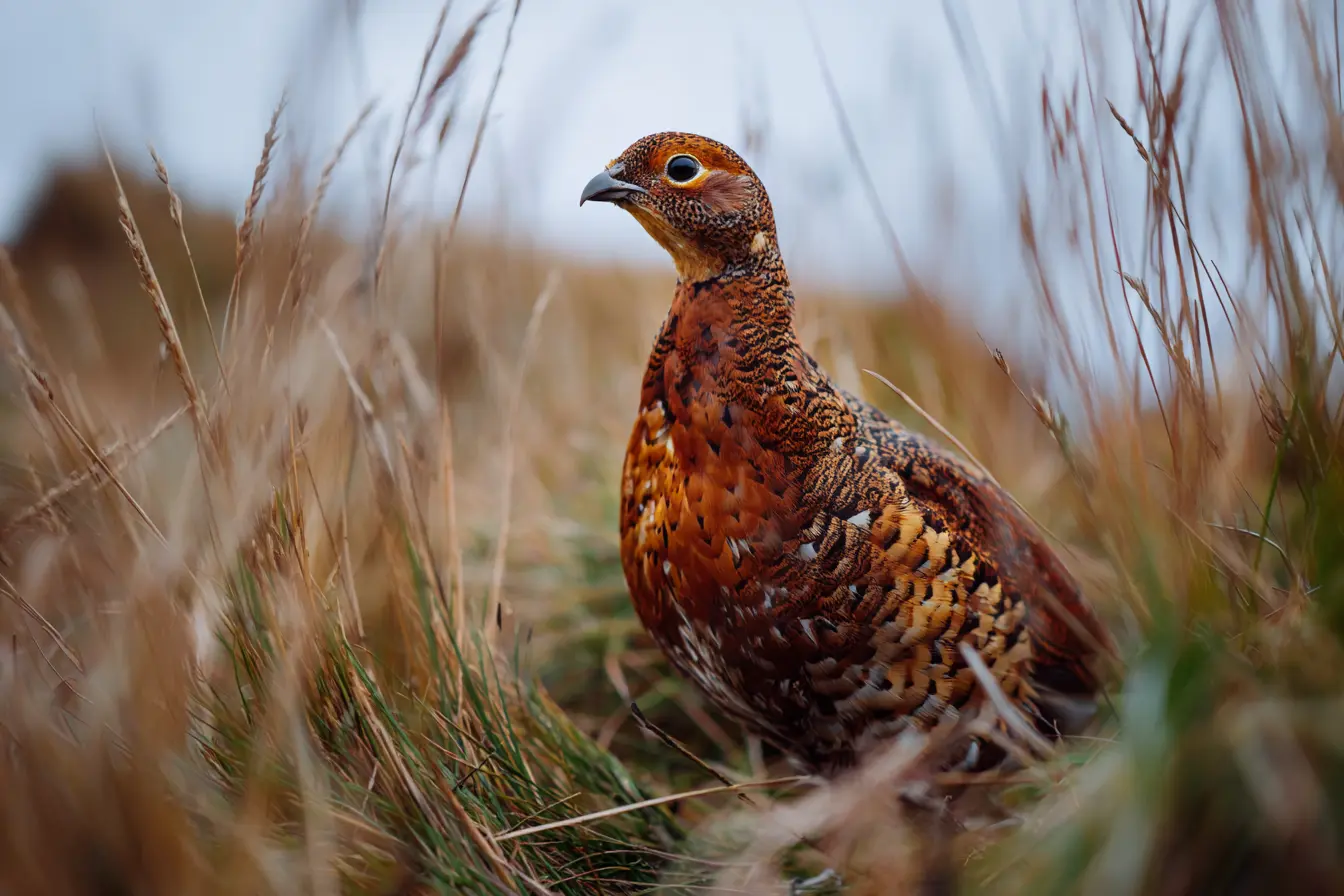
The Red Grouse (Lagopus lagopus scotica) is a subspecies of the Willow Ptarmigan found only in the British Isles. It is uniquely adapted to heather moorland habitats, feeding primarily on young heather shoots throughout the year.
Key Characteristics
- Size: 35–40 cm in length, weighing around 600–750 g.
- Appearance: Rich chestnut-brown plumage with a distinctive red eyebrow comb (wattle).
- Habitat: Upland heather moors of Scotland, northern England, parts of Wales, and Ireland.
- Diet: Almost entirely heather, with insects consumed by chicks in early life.
- Behaviour: Ground-nesting bird, highly territorial during breeding season.
The Red Grouse is resident, meaning it does not migrate, and relies completely on managed moorland for its survival.
The Importance of Grouse Management
Red Grouse management is primarily associated with driven grouse shooting, a traditional field sport that has also become a significant driver of moorland conservation.
Properly managed moors can support rich biodiversity, carbon storage, and water regulation. However, the practice has also been controversial, with debates around predator control, burning, and the environmental impact of shooting estates.
The aim of responsible management is to maintain a healthy, sustainable population of Red Grouse while supporting wider ecological goals.
Key Components of Grouse Management
Effective grouse management involves an integrated approach combining habitat management, predator control, disease control, and careful population monitoring.
1. Heather Management
Heather is the cornerstone of Red Grouse ecology. Young shoots provide food, while older, denser stands offer cover and nesting sites. Maintaining a mix of heather ages creates the ideal habitat mosaic.
Controlled Burning (Heather Burning)
Known as muirburn, this traditional technique involves burning small patches of heather to stimulate new growth.
- Conducted between 1 October and 15 April (under the Muirburn Code).
- Small strips, typically 30–50 metres wide, are burned in rotation every 8–15 years.
- Burns are spaced to provide a patchwork of young and mature heather.
- Older heather is left unburnt for nesting and shelter.
Controlled burning must follow the Muirburn Code (Scotland) or Heather and Grass Burning Regulations (England and Wales). Mechanical cutting is sometimes used as an alternative, particularly on deep peat where burning is discouraged.
Benefits of Managed Heather
- Encourages nutritious young shoots for feeding.
- Reduces wildfire risk by controlling fuel build-up.
- Maintains open habitat preferred by grouse.
- Creates structural diversity that benefits other species such as curlews, lapwings, and mountain hares.
2. Predator Control
Predation is one of the main natural pressures on Red Grouse populations. Eggs, chicks, and adults are vulnerable to foxes, stoats, crows, and other predators.
Legal predator control, carried out within wildlife protection laws, helps maintain breeding success.
Commonly Managed Predators
- Foxes
- Stoats and weasels
- Carrion crows
- Rats
Methods of Control
- Trapping: Approved spring traps and live-capture traps, used under General Licence.
- Shooting: Targeted fox or crow control.
- Habitat design: Maintaining open moorland to reduce predator cover.
All control must comply with UK wildlife legislation, and gamekeepers are required to use humane and legal methods at all times.
3. Disease Control
The Red Grouse is susceptible to parasitic diseases that can severely affect populations. Two of the most important are strongyle worm infestation and louping ill virus.
Strongyle Worms (Trichostrongylus tenuis)
These intestinal parasites reduce the bird’s ability to digest heather and can cause death in high numbers. Management includes:
- Providing medicated grit, containing an anthelmintic drug, which grouse ingest while feeding.
- Rotating grit stations to prevent contamination.
- Regularly monitoring worm burdens through faecal sampling.
Louping Ill Virus
This viral disease is transmitted by ticks, which also affect sheep. Integrated management involves:
- Treating sheep with acaricides to reduce tick populations.
- Reducing deer densities where ticks are abundant.
- Avoiding overstocking of sheep, which can exacerbate tick infestations.
4. Population Monitoring
Accurate population assessment is vital for sustainable management.
Counting Methods
- Spring Counts: Conducted from March to April to estimate breeding pairs.
- July Counts: Assess numbers of young birds after hatching.
- Transect Surveys: Carried out by trained teams using pointing dogs to flush birds.
Counts help determine whether shooting is sustainable and whether additional habitat or disease management is needed.
5. Water and Soil Management
Healthy moorland is important for both biodiversity and water regulation.
- Blocking old drainage ditches helps re-wet peat and restore hydrology.
- Avoiding burning on deep peat prevents carbon loss.
- Maintaining vegetation cover reduces soil erosion and downstream flooding.
These practices benefit not only grouse but also the wider ecosystem and help estates meet environmental targets.
6. Sustainable Shooting Practices
Driven grouse shooting is the traditional culmination of successful management, typically taking place between 12 August (the “Glorious Twelfth”) and 10 December.
Principles of Sustainable Shooting
- Shooting should only take place if summer counts indicate a surplus population.
- Avoid shooting in poor breeding years.
- Minimise disturbance to breeding birds in spring.
- Use trained dogs for efficient retrieval of shot birds.
Gamekeepers and moorland managers work closely with organisations such as the Game & Wildlife Conservation Trust (GWCT) to ensure sustainability and best practice.
Environmental and Conservation Benefits
Responsible grouse moor management can deliver significant ecological benefits when done properly.
- Maintains large tracts of open upland habitat, supporting waders like golden plover and curlew.
- Provides firebreaks that reduce wildfire severity.
- Controls tick populations, benefiting livestock and wildlife.
- Generates funding for rural employment and conservation through estate income.
Many moors are also designated Sites of Special Scientific Interest (SSSIs) or Special Protection Areas (SPAs), requiring adherence to environmental standards.
Controversies and Challenges
Grouse management has attracted criticism in recent years, particularly regarding raptor persecution, burning on peatlands, and environmental sustainability.
Key Issues
- Birds of Prey: Illegal killing of raptors such as hen harriers is a serious offence and condemned by legitimate moorland managers. Conservation partnerships now focus on coexistence.
- Burning on Peat: Controlled burning on deep peat has been restricted to reduce carbon emissions and protect water quality.
- Public Perception: Balancing conservation, field sports, and public access requires careful communication and transparency.
The future of grouse moor management depends on collaboration between landowners, conservation bodies, and government agencies to ensure ecological and social sustainability.
The Role of Gamekeepers
Gamekeepers are central to Red Grouse management. Their year-round work includes:
- Predator and disease control.
- Habitat burning and cutting.
- Population counting and record-keeping.
- Managing access and public relations.
Professional training and certification through organisations such as the British Association for Shooting and Conservation (BASC) and GWCT ensure high standards of welfare and environmental stewardship.
Economic and Cultural Importance
Grouse moor management supports rural communities through employment, tourism, and game sales.
- Provides full-time jobs for gamekeepers, beaters, and hospitality staff.
- Supports local businesses including gunmakers, lodges, and suppliers.
- Contributes to the cultural heritage of the British uplands.
In Scotland alone, grouse shooting is estimated to generate tens of millions of pounds annually for local economies.
Record Keeping and Regulation
Moorland managers must maintain accurate records of:
- Grouse counts and shooting days.
- Predator control measures.
- Medicated grit usage and disease data.
- Habitat management activities.
These records are essential for demonstrating compliance with environmental regulations and sustainability audits.
Future Directions for Grouse Management
As environmental priorities evolve, modern grouse moor management increasingly integrates biodiversity and climate goals.
- Greater use of cutting rather than burning on peat soils.
- Collaboration with rewilding and carbon projects.
- Improved monitoring using drones and GPS technology.
- Stronger partnerships with conservation groups to enhance raptor recovery and ecosystem health.
The goal is a balanced landscape that supports wildlife, rural livelihoods, and carbon sequestration alongside traditional field sports.
Conclusion
Red Grouse management in the UK is both an art and a science, a finely tuned relationship between people, wildlife, and landscape. When conducted responsibly, it supports biodiversity, preserves traditional skills, and maintains the iconic character of the British uplands.
Effective management demands knowledge, respect for the environment, and adherence to best practice. With continued commitment to sustainability and conservation, the Red Grouse and its heather moorland home can remain an enduring part of Britain’s natural and cultural heritage for generations to come.
Contents
- Understanding the Red Grouse
- The Importance of Grouse Management
- Key Components of Grouse Management
- Environmental and Conservation Benefits
- Controversies and Challenges
- The Role of Gamekeepers
- Economic and Cultural Importance
- Record Keeping and Regulation
- Future Directions for Grouse Management
- Conclusion
Tags
Vets near you
Speciality vets
- Aquatics vet specialists
- Birds vet specialists
- Camelids vet specialists
- Cats vet specialists
- Cattle vet specialists
- Deer vet specialists
- Dogs vet specialists
- Equines vet specialists
- Exotic vet specialists
- Goats vet specialists
- Pigs vet specialists
- Poultry vet specialists
- Sheep vet specialists
- Small Mammals vet specialists
- Wild vet specialists
Vet facilities
- Accessible by public transport
- Blood testing
- Car park nearby
- Client car park
- Dentistry
- Diagnostic imaging
- Disabled public access
- Flea and worm treatments
- Microchipping
- Mobile services
- Neutering
- Open at weekends
- Out-of-hours service
- Referral interests
- Referrals only
- Street parking outside
- Toilets available
- Vaccinations