Madagascan Tree Boa: The Emerald Ghost of Madagascar
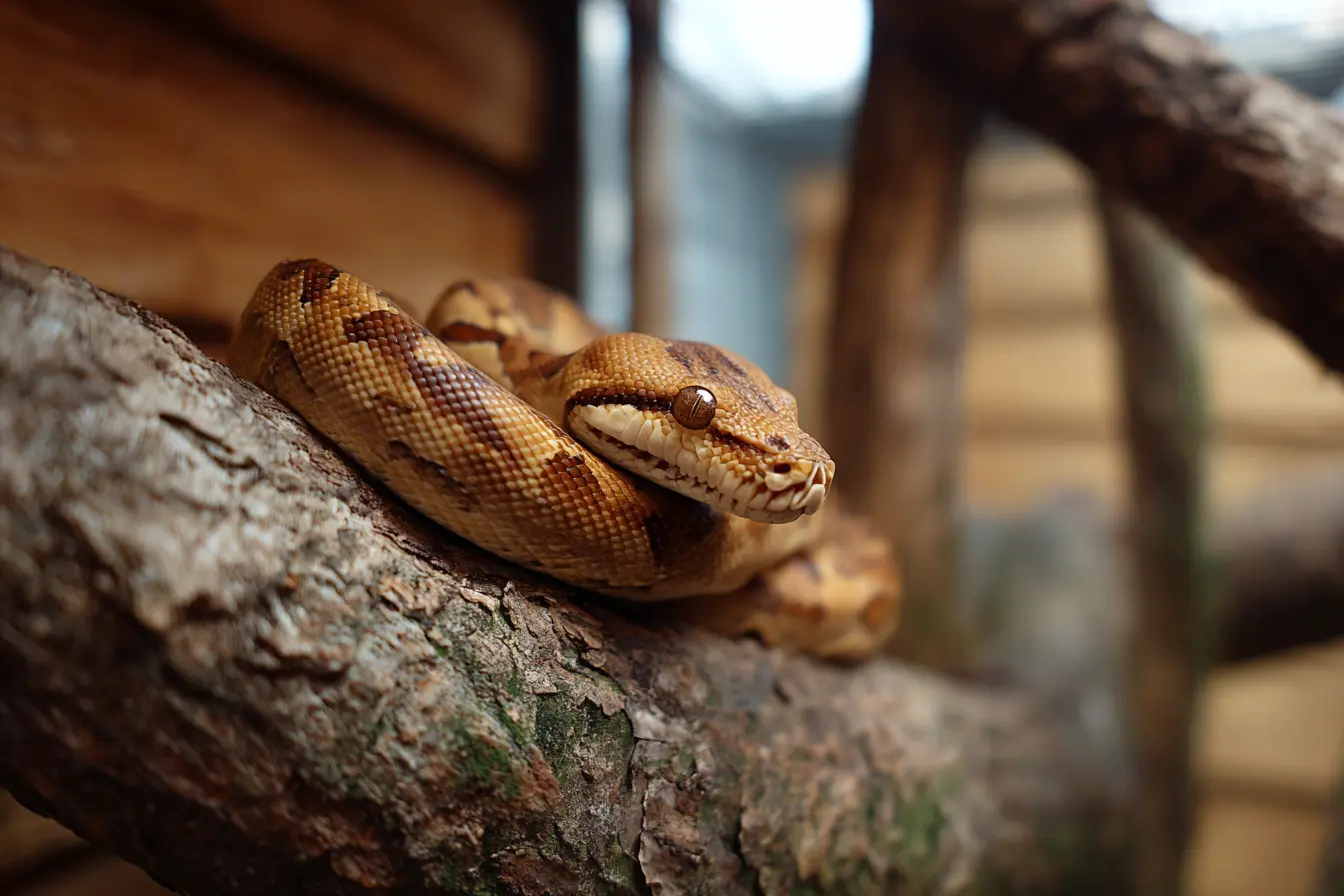
The Madagascan Tree Boa (Sanzinia madagascariensis) is one of the most beautiful and enigmatic snakes in the reptile world. With its rich green, bronze, or reddish tones, subtle patterning, and slow, deliberate movements, this arboreal boa embodies the mystery of Madagascar’s forests. Calm, powerful, and visually striking, it is a true connoisseur’s species.
Native exclusively to Madagascar, this boa is not a beginner snake. It requires space, stability, and a well-managed environment, but for experienced keepers it offers a rewarding combination of beauty, intelligence, and presence.
Origins and Natural Habitat
The Madagascan Tree Boa is endemic to Madagascar, where it inhabits humid tropical forests, wooded savannahs, and forest edges. It is most commonly associated with areas that provide dense vegetation and access to water, though it is adaptable across a range of forested habitats.
Primarily arboreal, this species spends much of its life in trees and shrubs, moving slowly along branches in search of prey. It is largely nocturnal, becoming active at dusk and during the night, when it hunts birds, small mammals, and reptiles.
Appearance and Temperament
Physical Traits
- Size: 120–180 cm in length, with females generally larger and heavier than males
- Build: Muscular and laterally compressed, ideal for climbing and coiling around branches
- Colouration: Highly variable, ranging from emerald green and olive to bronze, brown, or reddish hues
- Pattern: Irregular blotches or saddles, often edged with darker outlines
- Eyes: Large with vertical pupils, giving an alert, intelligent expression
Behaviour and Temperament
Madagascan Tree Boas are generally calm and deliberate, though they can be defensive if startled or mishandled. They rely on ambush rather than speed, often remaining motionless for long periods.
In captivity, many individuals become tolerant of routine maintenance and the presence of their keeper. They are not aggressive by nature, but they are strong snakes and should always be handled confidently and respectfully. They are best suited to keepers who appreciate observation over frequent handling.
Housing Requirements
This species thrives in a large, vertically oriented tropical vivarium that prioritises height, security, and environmental stability.
Enclosure Size
- Adult male: Minimum 120 cm x 60 cm x 120 cm
- Adult female: 150 cm x 75 cm x 150 cm or larger
Height is essential, as this species spends much of its time off the ground. Front-opening enclosures reduce stress during routine maintenance.
Heating and Temperature Gradient
- Warm basking area: 30–32°C
- Ambient daytime temperature: 26–28°C
- Cool area: 23–24°C
- Night-time: Drop to 22–24°C
Heat should be provided via radiant heat panels or guarded ceramic heat emitters, creating gentle warmth rather than intense hotspots.
Lighting
While UVB is not strictly required for boas, low-level UVB (2–5%) is increasingly recommended. It supports natural behaviour, circadian rhythms, and overall wellbeing.
Provide bright, naturalistic daylight lighting and maintain a 12-hour day/night cycle.
Humidity and Water
Humidity should be maintained between 60–80%, with short peaks after misting.
- Mist the enclosure daily or every other day
- Provide a large, sturdy water bowl suitable for soaking
- Ensure good airflow to prevent stagnant, overly damp conditions
Consistent humidity is vital for healthy shedding.
Substrate and Furnishings
- Substrate: Cypress mulch, orchid bark, or a soil-based tropical mix
- Decor: Thick horizontal and diagonal branches, vines, and elevated resting platforms
- Hides: At least one secure hide at height and one nearer ground level
- Plants: Live or artificial foliage to provide cover and security
The enclosure should offer multiple resting points at different temperatures.
Diet and Feeding
Madagascan Tree Boas are carnivorous ambush predators with relatively slow metabolisms.
Feeding Schedule
- Juveniles: Every 7–10 days
- Adults: Every 14–21 days
Food Items
- Appropriately sized mice or rats
- Chicks or small birds (occasionally, where legally and ethically sourced)
Prey should be no larger than the widest part of the snake’s body. Overfeeding can lead to obesity and health problems.
Feeding Notes
These boas often prefer feeding at night. Minimal disturbance before and after feeding helps prevent stress-related refusals.
Handling and Interaction
Handling should be calm, deliberate, and infrequent.
Best practices include:
- Support the full body, especially when removing from height
- Avoid handling during shedding or immediately after feeding
- Never restrain forcefully
Many individuals tolerate gentle handling well, but this species is best appreciated as a composed, observant display snake.
Common Health Concerns
Respiratory Infections
Often linked to low temperatures or excessive humidity without ventilation. Maintain stable conditions and good airflow.
Shedding Issues
Low or inconsistent humidity can cause retained shed. Increase misting during shedding cycles.
Obesity
Caused by feeding too frequently or prey that is too large. Stick to a conservative feeding schedule.
Stress
Frequent enclosure changes or excessive handling can lead to chronic stress. Provide visual security and routine.
Lifespan and Breeding
With proper care, Madagascan Tree Boas can live 15–25 years in captivity.
Breeding is achievable for experienced keepers. Females are livebearers, giving birth to 6–15 fully formed young after a gestation period of around 6–7 months. Seasonal cooling and careful conditioning are often required to stimulate breeding.
Observation and Enrichment
Though slow-moving, this species benefits from subtle enrichment.
Ideas include:
- Rotating branch layouts occasionally
- Providing multiple ambush perches
- Seasonal adjustments to temperature and lighting
Their cryptic posture, slow tongue flicks, and powerful coils make them endlessly fascinating to observe.
Conclusion
The Madagascan Tree Boa is a living embodiment of quiet power and elegance. Its rich colours, composed nature, and arboreal lifestyle make it one of the most captivating boas available to experienced keepers.
While it demands space, patience, and environmental precision, the Madagascan Tree Boa rewards dedicated care with longevity, beauty, and a truly special presence. For those drawn to sophisticated, naturalistic reptile keeping, this species is an exceptional choice.
Vets near you
Speciality vets
- Aquatics vet specialists
- Birds vet specialists
- Camelids vet specialists
- Cats vet specialists
- Cattle vet specialists
- Deer vet specialists
- Dogs vet specialists
- Equines vet specialists
- Exotic vet specialists
- Goats vet specialists
- Pigs vet specialists
- Poultry vet specialists
- Sheep vet specialists
- Small Mammals vet specialists
- Wild vet specialists
Vet facilities
- Accessible by public transport
- Blood testing
- Car park nearby
- Client car park
- Dentistry
- Diagnostic imaging
- Disabled public access
- Flea and worm treatments
- Microchipping
- Mobile services
- Neutering
- Open at weekends
- Out-of-hours service
- Referral interests
- Referrals only
- Street parking outside
- Toilets available
- Vaccinations