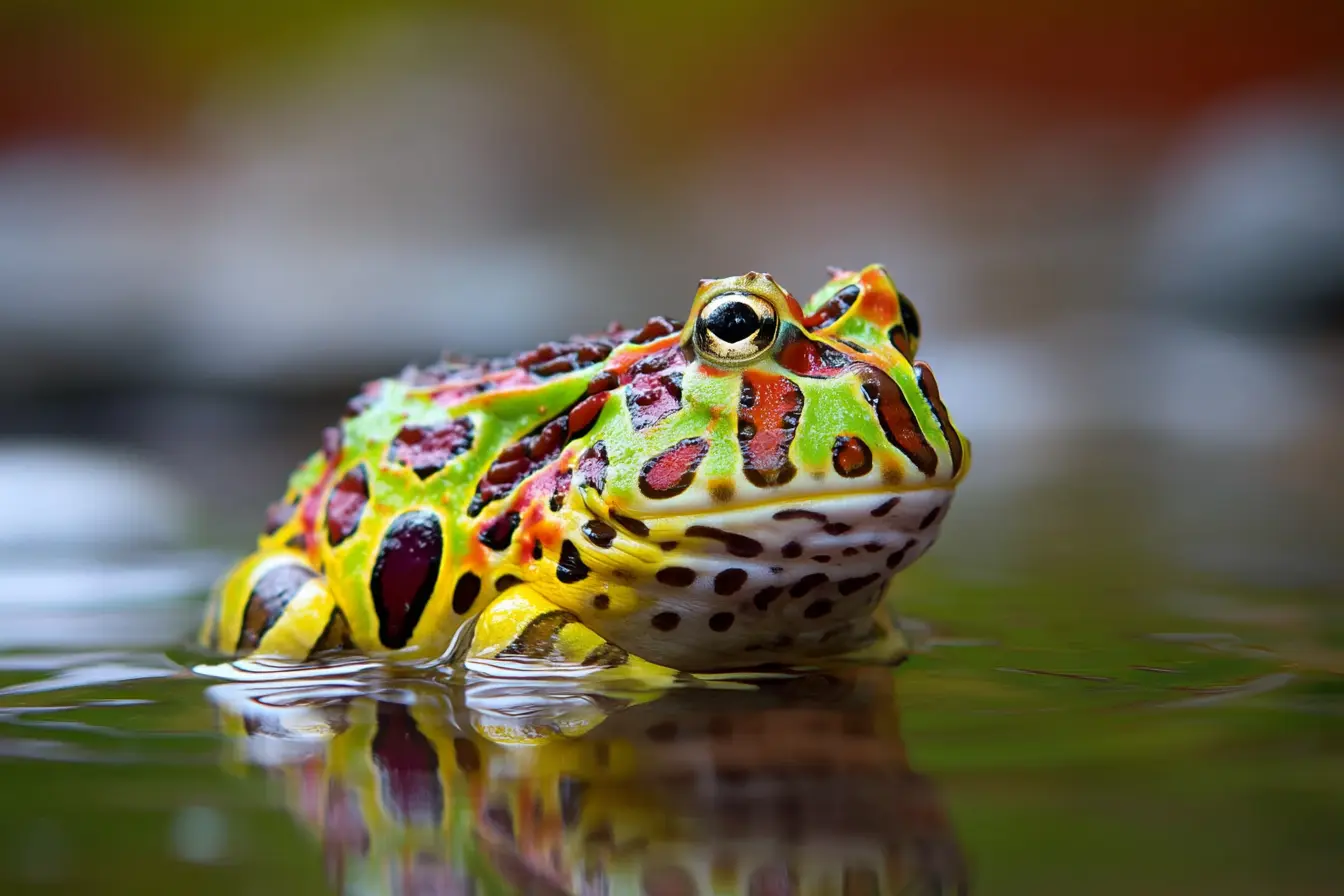
The Cranwell’s horned frog (Ceratophrys cranwelli), commonly known as the Pacman frog, is a vibrant and iconic amphibian beloved by hobbyists worldwide. Named after its large mouth and insatiable appetite—reminiscent of the video game character Pac-Man—this South American species is known for its ease of care, bold colouration, and fascinating sit-and-wait hunting behaviour. Native to the grasslands and dry forests of Paraguay, Argentina, and Bolivia, Cranwell’s horned frogs thrive in captivity when provided with a suitable environment and diet.
This comprehensive guide covers everything you need to know about caring for the Cranwell’s horned frog, including housing, feeding, handling, and breeding tips.
Physical Characteristics
Size
- Adult females grow larger than males, reaching up to 12–15 cm (5–6 inches).
- Males typically stay smaller, around 8–10 cm (3–4 inches).
Lifespan
- In captivity, Cranwell’s horned frogs can live between 10–15 years with proper care.
Colouration and Skin Texture
- Wild-type colouration includes vibrant green, brown, and tan patterns, offering excellent camouflage.
- Captive breeding has produced a range of morphs, including albino, fantasy, and bright lime-green variants.
- The skin is moist but relatively thick, aiding in water retention during dry periods.
Sexual Dimorphism
- Males are smaller, may develop a darkened throat patch, and vocalise, especially during the breeding season.
- Females are noticeably larger and more robust.
Legal and Ethical Considerations
Cranwell’s horned frogs are widely bred in captivity, making them easily available to enthusiasts. They are not considered threatened and are legal to keep in most countries. However, always buy from reputable breeders or pet stores that can guarantee captive-bred specimens, avoiding the risks associated with wild-caught amphibians.
Housing and Enclosure Setup
Cranwell’s horned frogs are terrestrial ambush predators and require a warm, humid setup with minimal climbing space.
Enclosure Size
- A single adult can be comfortably housed in a 40 litre (10 gallon) terrarium.
- A 60 litre (15 gallon) tank provides extra space but is not strictly necessary since these frogs are largely sedentary.
- Lids are recommended to maintain humidity, but the enclosure should be well-ventilated to prevent mould.
Substrate
- Moist coconut fibre, organic topsoil, or a soil/moss mix is ideal.
- The substrate should be 7–10 cm deep to allow burrowing.
- Keep the substrate damp but not waterlogged to prevent skin infections.
Hides and Decor
- A simple setup with a few hides such as cork bark or half-logs works well.
- Minimal decorations are required since these frogs rarely move, but adding leaf litter and moss enhances humidity and naturalistic appeal.
- A shallow water dish should always be available with dechlorinated water.
Temperature and Humidity
- Temperature: 24–28°C (75–82°F) during the day, with a slight drop at night.
- Humidity: Maintain 60–80% humidity, misting daily.
- A low-wattage heat mat or ceramic heat emitter may be used to maintain warmth.
Lighting
- No special UVB lighting is necessary for Cranwell’s horned frogs, though providing a day-night light cycle is beneficial.
- Low-level lighting helps regulate their natural rhythm but avoid bright, direct light.
Diet and Feeding
Cranwell’s horned frogs are voracious carnivores with a famously aggressive feeding response.
Suitable Food Items
- Crickets and locusts (gut-loaded)
- Earthworms and nightcrawlers
- Dubia roaches
- Occasional feeder fish (only disease-free and sparingly)
- Frozen-thawed pinky mice (very sparingly—only for adult frogs and not as a staple)
- Black soldier fly larvae
- Occasional waxworms (as treats due to high fat content)
Feeding Schedule
- Juveniles: Feed daily or every other day with smaller prey items.
- Adults: Feed 2–3 times per week.
- Prey should be no wider than the frog’s head to prevent impaction or choking.
Supplementation
- Dust food with a calcium supplement 1–2 times per week.
- Use a multivitamin powder once every two weeks to support overall health.
Behaviour and Handling
Cranwell’s horned frogs are best appreciated as a display species due to their sedentary and predatory nature.
Behaviour
- Primarily nocturnal but can be active at any time of day.
- Sit-and-wait predators that burrow into the substrate, ambushing passing prey.
- May bury themselves completely during periods of rest or aestivation (a summer dormancy).
- Not social—housing more than one together often leads to cannibalism.
Handling
- Handling should be avoided as their skin is sensitive and absorbs oils and chemicals.
- When necessary, use clean, wet hands or powder-free gloves.
- Frogs may attempt to bite due to their aggressive feeding reflex—care should be taken.
Health and Common Problems
Cranwell’s horned frogs are hardy but susceptible to typical amphibian health issues if care standards slip.
Common Health Issues
- Obesity: Due to overfeeding and lack of exercise.
- Impaction: From consuming prey that is too large or ingesting substrate.
- Skin Infections (Red Leg Syndrome): Resulting from poor hygiene or overly damp conditions.
- Shedding Problems: From low humidity.
- Choking: From overly large prey.
Preventative Care
- Monitor feeding closely to avoid obesity and impaction.
- Clean enclosure weekly, with spot cleaning as needed.
- Maintain proper temperature and humidity levels.
- Provide prey of appropriate size and variety.
Breeding Cranwell’s Horned Frogs
Breeding in captivity is achievable with patience and proper environmental manipulation.
Breeding Triggers
- Simulating a rainy season by increasing misting and slightly lowering temperatures encourages breeding behaviour.
- Males will vocalise to attract females.
Reproduction
- Eggs are laid in water, hatching within a few days.
- Tadpoles are aquatic and should be moved to a separate aquatic tank for rearing.
Tadpole Care
- Feed tadpoles high-protein foods such as finely ground fish flakes or specialised tadpole food.
- Regular water changes are essential to prevent disease.
- Metamorphosis occurs within 30–45 days, after which froglets require transition to terrestrial enclosures.
Conclusion
The Cranwell’s horned frog is a captivating, low-maintenance pet for those interested in observing natural predatory behaviours. Their striking appearance, relatively simple care requirements, and long lifespan make them a rewarding species for both beginners and advanced amphibian keepers.
With the correct balance of temperature, humidity, clean substrate, and a nutritious diet, these frogs can thrive in captivity for many years. While handling is minimal, the vibrant colours and comical personality of the Cranwell’s horned frog provide plenty of enjoyment from the safety of their terrarium.
Quick questions
- What should I know about cranwell's horned frog?
- The Cranwell's horned frog, also called the Pacman frog, is a popular pet known for its large mouth and appetite. This South American amphibian is easy to care for and displays unique hunting behaviour. Known for bold colours and. Vet Verified can help you compare UK veterinary practices by location, species, services and opening hours before you call.
- When should I contact a vet about cranwell's horned frog?
- Contact a veterinary practice if your pet seems unwell, symptoms are getting worse, you are unsure what to do, or the situation may be urgent. Vet Verified helps you compare practice details, but a vet should advise on your pet's current care.
- Can Vet Verified help me find exotic vets?
- Yes. Use Vet Verified to compare exotic vets across the UK, then check practice profiles and call directly to confirm current availability.
Find a vet
Need a vet for this?
Use Vet Verified to compare UK veterinary practices that match this topic, then call the practice directly to confirm current services and availability.